
 CN




Bulk Phosphatidylserine Supplier
Time:2026-10-19Product Definition
Lixing supplies 20% soybean-derived phosphatidylserine (PS) powder for dietary supplement manufacturers and R&D teams who need a consistent raw material for memory, focus, and stress-management formulas.
Core Selling Points
Fixed 20% assay (HPLC) — A 500 mg capsule delivers 100 mg of PS, so your label can state a clear per-serving dose without adding excessive fillers. The assay is measured by HPLC and reported on the batch CoA.
Non-GMO soy origin — Starting lecithin is non-GMO and fully traceable to a single supplier declaration, which reduces allergen and documentation risk when selling in EU and North American markets.
Heavy metal limits — Lead and arsenic are controlled at ≤ 0.1 mg/kg per batch CoA. This lowers the chance of finished products failing stricter retail requirements during import or chain testing.
24-month stability — Accelerated stability data show PS activity remains above 95% of the label claim for 24 months in sealed containers below 25°C. That gives your production and logistics teams a clear planning window.
Batch-specific CoA — Assay, moisture, heavy metals, microbial counts, and solvent residues are tested for every batch, so incoming inspection can be completed in one day.
Technical Parameters
| Parameter | Value | Additional Notes |
|---|---|---|
| Product | Phosphatidylserine (PS) | Soybean phospholipid extract |
| Assay (as PS) | ≥ 20% | HPLC method; lot range 19.5–20.5% per CoA |
| Source | Non-GMO soybean lecithin | Supplier declaration available |
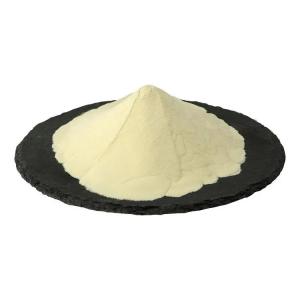
| Appearance | Light yellow to off-white powder | Free from visible clumps |
| Loss on drying | ≤ 1.0% | Determined on a 1 g sample |
| Lead (Pb) | ≤ 0.1 mg/kg | ICP-MS per batch |
| Arsenic (As) | ≤ 0.1 mg/kg | ICP-MS per batch |
| Total plate count | ≤ 1,000 CFU/g | Aerobic bacteria |
| Pathogens | Negative | Salmonella, E. coli /25g |
| Solvent residue | Not detected | Detection limit 10 mg/kg |
| Shelf life | 24 months | Sealed container, store below 25°C |
Suitable Application Scenarios
R&D teams designing a cognitive formula use this PS powder at 100 mg per serving to match the dosage found in common clinical study designs.Contract manufacturers use the standardised 20% strength to keep capsule fill weights predictable and avoid overruns during blending.
Sports nutrition brands combine PS with plant extracts and adaptogens to develop stress-recovery products without adding moisture-sensitive ingredients.
Aging-well product owners replace higher-cost sunflower PS with this soy-based powder while maintaining the same 100 mg per-capsule dose.
Procurement teams building a second-source strategy use this ingredient because batch-to-batch assay variation stays within ±0.5 percentage points.
Frequently Asked Questions
What is phosphatidylserine used for in supplements?
Manufacturers use phosphatidylserine in dietary supplements aimed at memory, focus, and cognitive functioning. In finished products, PS is usually combined with omega-3s or B vitamins. It appears in capsules, tablets, and softgels because the powder is oil-miscible and stable in dry formulations.
What dosage of phosphatidylserine should a finished product provide?
Most published human trials on memory and attention use 100 mg to 300 mg of phosphatidylserine per day. With a 20% PS powder, a 500 mg capsule gives 100 mg, and a 600 mg capsule gives 120 mg. This lets formulators set a transparent dose without adding large fill volumes.
Is Lixing phosphatidylserine derived from soy?
Yes, this ingredient comes from non-GMO soybean lecithin. It contains soy phospholipids and is not suitable for consumers with a soy allergy. Sunflower-sourced PS is the alternative if your label needs to be soy-free. The soy origin is declared on the certificate of analysis and product specification sheet.
What are the differences between soy and sunflower phosphatidylserine?
Soy phosphatidylserine generally has a lower cost and a more established supply base, while sunflower PS is chosen when avoiding soy allergens is a priority for the label. Both materials can be produced at 20% assay. The main decision points are allergen labelling, cost per kilogram, and whether the brand wants a soy-free claim.
How stable is phosphatidylserine powder during storage?
Store the sealed container below 25°C with a relative humidity below 60%. Under those conditions, the 20% PS assay stays above 95% of the declared value for 24 months. After opening, reseal immediately because the powder absorbs moisture and can form soft lumps.
Can phosphatidylserine be used in gummy supplements?
Phosphatidylserine is a phospholipid powder that does not dissolve well in water, so gummies are difficult to formulate because the powder may separate. Capsules and softgels are the practical formats. Tablets work only if you add a suitable binder and control the tableting pressure to avoid sticking.
What quality tests are performed on each batch of this PS powder?
Each batch is tested for assay by HPLC, loss on drying, heavy metals (lead, arsenic), total plate count, and pathogens. Solvent residues are checked as well. Results are listed in a batch-specific certificate of analysis. This confirms that incoming powder matches the approved specification before production.
Differentiation Summary
Most bulk phosphatidylserine suppliers offer either sunflower or soy batches with a wide assay range. Lixing sets the assay at a fixed 20% and provides the CoA at no extra cost, so your production team can keep capsule fill weights stable. For a manufacturer that needs predictable material over multiple purchase orders, the main advantage is consistency: same visual appearance, same particle behaviour, same test results every time. This is not a premium-priced specialty ingredient, nor a commodity with variable quality. It suits brands that want a clean supply chain without changing their formulation every time a new batch arrives. For long-term cooperation, suppliers can keep the same specification across quarterly or annual purchase schedules.