
 CN
CN



Phosphatidylserine Expor
Time:2026-09-24Product Overview
Lixing Phosphatidylserine is a bulk phospholipid raw material for nutraceutical manufacturers, beverage formulators, and export trading companies, addressing the need for batch-verified PS content in cognitive-support and memory-support products.
Core Selling Points
HPLC-ELSD verified PS content of 20%, 50%, or 70% — each lot ships with an individual Certificate of Analysis, so finished-product label claims from 100 mg to 300 mg per serving are traceable to documented purity rather than supplier estimates.
Soy and sunflower lecithin source options — both grades deliver identical PS content; the sunflower grade is non-GMO and soy-allergen-free, which simplifies allergen labeling for EU and North American markets.
Total heavy metals ≤10 ppm, with lead ≤2 ppm and arsenic ≤1 ppm — third-party lab reports are available per batch, reducing the compliance workload for product registration in regulated export destinations.
≥95% of particles pass an 80-mesh screen — the uniform powder fraction improves blending homogeneity during tablet compression and dry-powder premixing, lowering content-uniformity failures in finished products.
24-month shelf life supported by ICH-based stability data — documented stability results can be referenced directly in regulatory dossiers, shortening submission preparation time.
Technical Specifications
| Parameter | Value | Remark/Test Method |
|---|---|---|
| Product Name | Phosphatidylserine (PS) powder | Bulk raw material |
| CAS Number | 51446-62-9 | Valid for lecithin-derived PS |
| Available Purity | 20%, 50%, 70% | HPLC-ELSD quantitation |
| Source | Soy lecithin / Sunflower lecithin | Non-GMO sunflower grade optional |
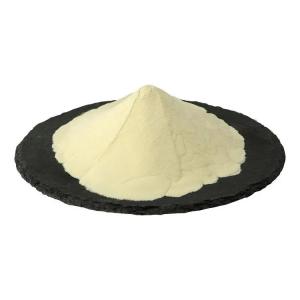
| Appearance | Light yellow to off-white powder | Free from visible impurities |
| Particle Size | ≥95% through 80 mesh | Standard testing sieves |
| Loss on Drying | ≤3.0% | 105°C, 4 hours |
| Total Heavy Metals | ≤10 ppm | Pb ≤2 ppm, As ≤1 ppm, Cd ≤1 ppm |
| Total Plate Count | ≤1,000 cfu/g | AOAC method |
| Yeast & Mold | ≤100 cfu/g | AOAC method |
| Salmonella | Negative in 25 g | AOAC method |
| E. coli | Negative in 10 g | AOAC method |
| Packaging | 1 kg foil bag / 25 kg fiber drum | Inner double PE bags |
| Shelf Life | 24 months | Store sealed below 25°C, avoid sunlight |
| MOQ | 25 kg | Full lot CoA included |
Application Scenarios
Memory-support supplement manufacturers — formulating adult cognitive capsules with a documented 100–300 mg daily PS dosage can use the 20% grade to reach label strength with fewer excipients and a smaller tablet weight.
Sports nutrition brands — adding 100–200 mg PS to pre-workout or recovery stick packs supports stress-response formulas; the 80-mesh grade blends evenly in small-batch dry mixes.
Functional beverage producers — producing stick-pouch powder drinks with PS at 10–20% of the blend requires the fine particle fraction for consistent flow through multi-head filling machines.
Export trading companies — sourcing a single ingredient with complete export paperwork (CoA, MSDS, allergen statement, non-GMO certificate) simplifies consolidation shipments to EU and ASEAN buyers.
Infant formula and geriatric food developers — the sunflower-sourced grade removes soy allergen concerns and fits hypoallergenic product platforms without changing the active ingredient profile.
Frequently Asked Questions
What is the difference between sunflower and soy phosphatidylserine powder?The PS content and functional properties are identical. Sunflower-derived PS is non-GMO and soy-allergen-free, which matters for allergen-clean label products; soy-derived PS is the lower-cost option.
What certificates and test reports come with each shipment?Every lot includes a Certificate of Analysis covering purity, heavy metals, and microbiology, plus an MSDS and an allergen statement. ISO 9001 and HACCP certificates for the production plant are available on request.
Is this phosphatidylserine suitable for vegan supplement formulations?Yes. Both the soy and sunflower grades come from lecithin processing with no animal-derived inputs, no gelatin coatings, and no lactose carriers, so the bulk powder fits vegan finished-product labeling.
What is the minimum order quantity and lead time?The MOQ is 25 kg, which is one drum. Standard lead time is 10–15 working days from confirmed order; 1–5 kg samples ship within 5 working days with a sample CoA.
Can I request third-party testing before placing a large order?Yes. Testing with SGS, Eurofins, or your nominated laboratory can be arranged at agreed cost. Alternatively, our in-house HPLC-ELSD data is provided at no charge and is sufficient for most import due-diligence checks.
How should the powder be stored to preserve potency?Store sealed below 25°C in a dry place away from direct sunlight. After opening, re-seal the container within 30 minutes and consume the material within three months to avoid moisture uptake.
Does the product comply with US FDA and EU supplement regulations?Raw-material documentation covering food safety parameters, stability, and ingredient origin is provided for your finished-product registration with FDA or EU authorities. Final label compliance and registration remain the responsibility of the product registrant.
What payment terms and packaging customization are available?Standard terms are T/T with a 30% deposit and 70% against a copy of shipping documents. Custom packaging options and private-label requests can be arranged at confirmed order.
Differentiation Summary
Unlike generic soy lecithin blends that report only total phospholipid percentages, this PS powder provides per-lot HPLC-ELSD purity data, an optional non-GMO sunflower source for allergen-restricted products, and a complete export document package under a single SKU. Manufacturers and traders who need reproducible content uniformity, audit-ready paperwork, and one predictable supply source will find this ingredient better suited than commodity-grade phospholipid alternatives.