
 CN
CN


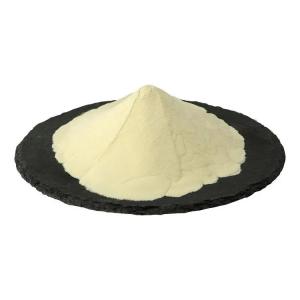


Phospholipids reduce the viscosity of chocolate slurry and enhance its fluidity
Time:2026-08-10Phospholipids act as an efficient natural viscosity-reducing agent in chocolate production, effectively lowering the viscosity of chocolate slurry and improving its overall fluidity. Chocolate slurry consists of cocoa solids, sugar particles, cocoa butter and minor lipid fractions. Fine sugar and cocoa particles form dense suspensions within continuous fat phases, and particle-particle friction as well as interfacial tension between solid‑liquid interfaces tend to raise slurry viscosity, which brings difficulties to pumping, moulding, enrobing and subsequent forming processes. As amphiphilic surface-active substances, phospholipids contain both hydrophilic polar head groups and hydrophobic fatty-acid tails, enabling them to adsorb rapidly onto the surface of suspended sugar and cocoa fine particles inside chocolate slurry.
Upon adsorption, the hydrophobic moiety of phospholipids embeds into the fat phase, while the hydrophilic polar portion coats solid particle surfaces. This forms a thin interfacial film that creates steric-hindrance barriers, inhibiting direct contact and aggregation among sugar and cocoa micro-particles. Particle-particle friction and network stacking are weakened significantly, which directly cuts down the apparent viscosity of chocolate slurry and optimises flow behaviour. With improved fluidity, chocolate slurry achieves better spreadability at a fixed fat content. Manufacturers can maintain ideal processing performance without excessive addition of expensive cocoa butter, which helps control raw‑material costs while keeping desirable texture.
Beyond viscosity reduction and fluidity improvement, phospholipids exert multiple auxiliary functions for chocolate systems. They stabilise the fat-solid suspension and restrain partial agglomeration of fine particles during tempering and storage. They also ease air-bubble release inside molten slurry, reducing pore defects in finished chocolate products. For enrobing-grade chocolate, enhanced fluidity enables thinner and more uniform coating layers on confectionery or nut centres, avoiding excessive coating weight and surface unevenness.
Dosage must be strictly controlled in practical manufacturing. Insufficient phospholipid addition cannot form complete interfacial films, leading to limited viscosity-lowering effect. Excess phospholipids, however, may trigger undesirable changes such as softening texture, weakened snap property, or higher risk of fat bloom during shelf life. Typical application dosage is kept at a low percentage level, matching particle fineness, fat proportion and processing temperature of different chocolate formulations.
It is worth noting that phospholipids do not change the fundamental composition of cocoa butter. Their viscosity-regulating effect depends heavily on particle fineness from conching, tempering conditions and system temperature. High temperature can further amplify fluidity, yet excessive heat accelerates fat deterioration. Therefore phospholipids work synergistically with conching parameters and thermal processes rather than acting as an isolated solution.
Phospholipids serve as a natural and effective viscosity reducer for chocolate. By modifying solid-fat interfacial properties and mitigating inter-particle interaction, they reduce slurry viscosity and boost fluidity, optimising pumping, casting and enrobing operations. Proper dosage management guarantees processing performance and stable shelf-life quality, making phospholipids an indispensable functional ingredient in modern chocolate industrial production.