
 CN
CN


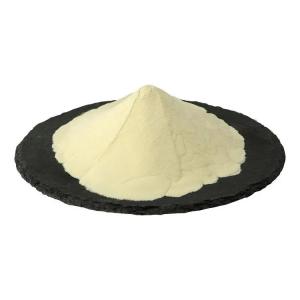


Phospholipids solve the industrial application problem of layering and sedimentation in oat milk
Time:2026-08-06Oat milk is a popular plant-based beverage prepared by enzymatic hydrolysis and homogenization of oat grains. During industrial sterilization, long-term shelf storage and cold-chain circulation, it is prone to typical stability defects including oil-water layering, upper-layer creaming and bottom sedimentation. These quality problems restrict large-scale commercial promotion. As a natural amphiphilic emulsifying core raw material, food-grade phospholipids can build firm oil-water interfacial films, regulate particle aggregation behaviour and coordinate with water-phase colloids, effectively alleviating layering and sedimentation, and solving key technical bottlenecks for the industrial production of stable oat milk.
The root causes of instability in oat milk come from its complex multi-phase composition. Oat raw materials contain plant lipids, protein fragments, starch granules and dietary fiber particles. After grinding and enzymatic treatment, insoluble fiber and residual starch form solid dispersed phases, while endogenous plant oil constitutes the oil phase. Under gravity, large-density solid particles tend to sink to form sediment; fat droplets with lower density float upward and produce creaming layers. High-temperature sterilization further aggravates this trend. Heat denaturation of oat protein weakens its emulsifying capacity, protein aggregates appear, droplet coalescence occurs, and layering becomes more obvious during subsequent storage. Relying only on native oat protein cannot maintain long-term homogeneous suspension under industrial harsh processing conditions.
Phospholipids play a central role at the oil-water interface. Amphiphilic phospholipid molecules quickly adsorb onto the surface of fat droplets during homogenization. The hydrophobic fatty-acid chains insert into oil droplets, and hydrophilic polar head groups face the aqueous phase, forming dense and tough interfacial films. This physical barrier prevents mutual contact and coalescence between fat droplets, suppressing large-size oil-drop formation which is the direct cause of floating creaming. Compared with single-protein interfacial films, composite films formed by phospholipids together with oat protein possess higher thermal stability, and can resist structural damage during ultra-high-temperature sterilization, maintaining droplet fineness after heating.
For solid-particle sedimentation represented by oat fiber and micro-starch, phospholipids improve the surface wettability of insoluble particles. Partially adsorbed phospholipid changes the surface charge and hydration state of fiber fragments, reducing mutual agglomeration tendency among solid particles. Combined with appropriate homogenization process, it inhibits continuous growth of sediment particle size. Phospholipids alone cannot generate high viscosity in aqueous phase, so they are usually used together with small amounts of water-soluble colloids. Phospholipid-colloid synergistic network provides weak‑gel suspension force for the whole system, slowing down the settling velocity of solid particles under gravity, which greatly reduces bottom sediment accumulation.
Dosage, adding sequence and homogenization process determine the actual stabilizing effect of phospholipids in oat-milk production. Insufficient phospholipid content cannot fully cover fat droplet surfaces, leaving partial droplets unprotected, and layering still occurs. Excessive phospholipid may trigger partial complexation with oat protein, inducing unexpected flocculation. In actual industrial operation, phospholipids need to be fully pre-dispersed before homogenization rather than being added dry directly. Combined with two-stage high-pressure homogenization, phospholipids can be uniformly distributed on every oil-drop surface to give full play to emulsification protection.
It should be clarified that phospholipids belong to natural clean‑label emulsifiers. Different from a large number of synthetic emulsifiers, plant‑derived phospholipids conform to clean-label market demand for plant milk. Nevertheless, phospholipids cannot eliminate sediment-layering risks unconditionally. If oat raw material quality fluctuates, enzymatic hydrolysis degree is out-of-control, or sterilization parameters deviate, stability defects may still appear. Phospholipids work as core technical means to optimize system stability on the basis of reasonable front-end process control.
In the finished-product shelf-life test, well-formulated oat milk with phospholipid addition maintains uniform milky state, without obvious oil ring on the top and compact sediment at the bottom. Even under refrigerated storage conditions, the system still keeps good dispersion performance. This greatly improves product appearance and consumer acceptance.
As plant-beverage industry develops rapidly, layering and sedimentation have long been the main pain points restricting oat-milk industrialization. Phospholipids serve as the core emulsification component. By constructing high-strength interfacial films, improving particle dispersion and cooperating with aqueous-phase thickening systems, they restrain fat creaming and solid-particle sedimentation. It provides an effective clean‑label solution for stable large-scale industrial production of oat milk.