
 CN




Phosphatidylserine 51446-62-9 Powder Price
Time:2026-11-03Lixing Phosphatidylserine Powder is a 50% sunflower-based bulk ingredient for supplement brands and formulators, designed to standardize cognitive-support formulations that target memory decline and mental fatigue.
Core Benefits at a Glance
50.0% PS content (HPLC) — Allows formulators to hit a 100 mg PS dose with only 200 mg of powder, reducing the amount of filler needed in capsules and sachets.Sunflower-origin lecithin — Provides a soy-free, non-GMO source that supports clean-label claims and avoids the allergy concerns often associated with soybean-derived phospholipids.
≤5.0% loss on drying — Maintains free-flowing powder behavior during encapsulation and dry blending, minimizing clogged hoppers and tablet compression issues.
Factory-direct traceability — Each order ships from the manufacturer’s own GMP line with a batch-specific certificate of analysis, so quality records are documented at a single point.
Detailed Specifications
| Parameter | Value | Additional Notes |
|---|---|---|
| Product name | Phosphatidylserine Powder | Bulk ingredient for dietary supplement use |
| CAS number | 514-81-4 | Phospholipid compound |
| PS content | 50.0% (HPLC) | Chromatographic purity measured by in-house QC |
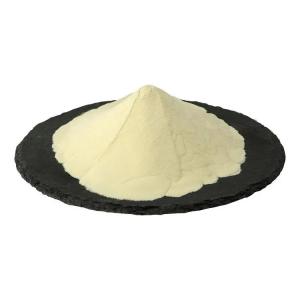
| Appearance | Fine light yellow powder | Free from clumping and visible contaminants |
| Particle size | ≥95% passes 180 µm screen | Suitable for capsule filling and dry blends |
| Loss on drying | ≤5.0% | Measured at 105 °C |
| Lead | ≤1 mg/kg | ICP-MS method |
| Arsenic | ≤1 mg/kg | ICP-MS method |
| Mercury | ≤0.1 mg/kg | ICP-MS method |
| Total plate count | ≤1,000 CFU/g | Aerobic microbial count |
| Yeast & mold | ≤100 CFU/g | Standard compendial method |
| Solvent residue | Conforms to residual limits | GC method |
| Origin | Sunflower lecithin | Non-GMO, soy-free source |
| Shelf life | 24 months from manufacture date | Store in sealed container below 25 °C |
| Packaging | 25 kg per carton / custom | Aluminum-foil bag or fiber drum |
Source: batch-specific certificate of analysis (COA) supplied with each consignment.
Applicable Scenarios
A contract manufacturer producing nootropic capsules for a brand that requires allergen-free raw materials: this sunflower-based powder supports a soy-free claim and reduces cross-contact risk.A startup supplement company sourcing small batches for stability testing: the 100 g sample program with COA allows formulation adjustment before committing to volume.
An importer managing memory-support powders for aging populations: the 50% concentration makes dose calculation straightforward and simplifies packing into stick sachets.
A private-label manufacturer replacing a distributor-sourced ingredient: direct factory supply shortens the documentation chain and allows production schedules to align with dispatch dates.
Common Questions
What is phosphatidylserine powder used for?
It is an active raw material in cognitive-health supplements. Research links phosphatidylserine to memory retention, attention, and stress regulation. Formulators add it to daily brain-support capsules, student focus formulas, and age-related memory products. The 50% concentration simplifies dosing and blending.
Is this phosphatidylserine soy-free?
Yes. This product is made from sunflower lecithin, not soy. The manufacturing line is cleaned according to GMP protocols, and each batch’s COA includes allergen information. That makes it suitable for soy-free, non-GMO, and vegetarian supplement labels.
What dosage should I use in a capsule formula?
A typical finished-product serving contains 100–300 mg of phosphatidylserine powder to provide 50–150 mg of PS-active. For a 100 mg PS-active serving, use 200 mg of this 50% powder, then add excipients and filler to reach the target fill weight.
How is the PS content verified?
PS content is measured by high-performance liquid chromatography (HPLC) in the manufacturer’s QC lab. The result appears on the batch-specific certificate of analysis. Heavy metals are tested by ICP-MS, and microbial counts follow USP/EP methods. You can request the raw data directly from the factory.
Can you provide samples before ordering?
Yes. The standard sample is 100 g with a copy of the corresponding COA. Samples are sent after you confirm the intended application, because shelf-life and packaging requirements differ between capsule fillers and beverage sachet makers. Shipping cost is paid by the buyer.
What is the minimum order quantity?
The regular MOQ is 25 kg for the 50% product, which is one standard carton. Smaller trial orders are available separately. Custom specifications, such as a 20% concentration or specific particle size, require a technical review and a separate MOQ confirmation.
How does factory-direct supply affect lead time?
Direct orders leave the plant according to the production calendar, not through a distributor’s inventory. For standard 50% PS powder, lead time is 10–15 days after payment and artwork confirmation. This allows buyers to align scheduled manufacturing with their own filling lines.
Is this powder suitable for vegetarian capsules?
Yes. The powder itself contains only plant-derived phospholipids and no animal-derived ingredients. Because it is sunflower-based, the ingredient fits vegetarian and vegan labeling when combined with plant-based capsules. Confirm the capsule shell and excipients with your finished-product formulator.
Product Differentiation
Most bulk phosphatidylserine on the market is extracted from soy lecithin, often supplied in 20% or 50% concentrations through third-party distributors. Lixing supplies a 50% sunflower-based version directly from its own GMP facility, which gives buyers a soy-free material, a fixed specification, and a shorter documentation chain. It is well suited for supplement companies that need clean-label positioning, full batch traceability, and direct technical support during formulation.