
 CN




High quality Phosphatidylserine 51446-62-9 Supplier
Time:2026-11-23Lixing Phosphatidylserine is a soybean-derived phospholipid bulk powder, supplied for dietary supplement manufacturers and formulators, addressing age-related cognitive decline, memory retention, and mental fatigue through a standardized 50% assay concentration.
Core Selling Points
≥50% Phosphatidylserine content (HPLC) — Provides measurable active ingredient per gram, allowing formulators to meet dosage claims with lower raw material usage (e.g., 100mg phosphatidylserine per serving from 200 mg powder).Soy-derived, non-GMO raw material — Ensures stable supply chain and clean label compatibility for North American and EU markets.
Solvent-free extraction process — Uses no residual organic solvents (acetone, hexane), achieving a high-purity profile suitable for vegan and clean-label product lines.
Particle size ≤ 180 µm — Guarantees homogeneous blending in capsules, tablets, and stick packs without flow obstruction during high-speed tablet compression.
Heavy metals ≤ 10 ppm — Each batch meets USP/EP contamination limits, verified by ICP-MS analysis prior to release.
Detailed Specification Table
| Parameter | Value | Remarks |
|---|---|---|
| Assay (Phosphatidylserine) | ≥ 50% | Determined by HPLC method |
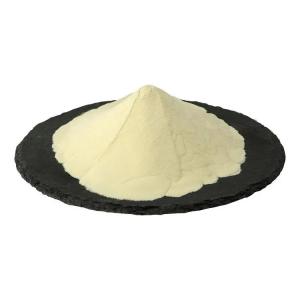
| Appearance | Light yellow to brown fine powder | Free from visible impurities |
| Particle size | ≤ 180 µm | 100% passes through 80 mesh screen |
| Loss on drying | ≤ 5.0% | Standard for bulk phospholipid shipping |
| Total plate count | ≤ 1000 CFU/g | Microbial limit per internal QC |
| Yeast & mold | ≤ 100 CFU/g | Meets dietary supplement standards |
| Heavy metals (Pb, As, Cd, Hg) | ≤ 10 ppm total | ICP-MS analysis per batch |
| Solvent residue | Negative | No acetone or hexane detected |
| Packing | 25 kg/drum, double PE bag inside | Custom packing available for OEM |
| Storage | Cool, dry place below 25°C | Stable for 24 months in original sealed packaging |
| Shelf life | 24 months from manufacture date | Retest batch number printed on COA |
Applicable Scenarios
Cognitive supplement formulators developing memory-enhancing capsules or tablets: use 50% phosphatidylserine powder to deliver 100–200 mg phospholipid per daily dose with minimal excipient.Sports nutrition brands creating recovery and focus products: combine phosphatidylserine with caffeine and L-theanine to support reaction time and post-exercise mental clarity.
Elderly care product R&D teams targeting age-related memory support: formulate softgels or reconvertible powder sachets containing 150mg phosphatidylserine per serving for clinical study validation.
Private label manufacturers producing brain health gummies: adapt the powder with a controlled release matrix to mask phospholipid flavor while preserving assay stability.
Stick pack producers looking for solvent-free raw material: add to ready-to-mix beverages where residual solvent levels would violate clean-label requirements.
Common Questions
What is the recommended dosage of phosphatidylserine for cognitive support?
The common effective dose in human studies is 100–300 mg per day, split into two servings. For initial formulation, start with 100 mg per serving and adjust based on your target clinical endpoint and blend capacity.
Is this phosphatidylserine derived from soy or sunflower?
This product is derived from soy lecithin. Sunflower-derived phosphatidylserine is available separately by request, but note that sunflower phosphatidylserine typically assays at a lower 20–30% concentration and requires higher fill weight to achieve the same active dose.
What does "≥50% assay" actually mean in practical terms?
It means each 100 grams of the powder contains at least 50 grams of pure phosphatidylserine molecules. The remaining mass consists of other phospholipids (PC, PE) and residual lipids, which act as natural carriers and do not interfere with tableting or encapsulation.
How does this compare to phosphatidic acid or citicoline?
Phosphatidylserine directly supplies the phospholipid backbone for neuronal membranes, while citicoline provides choline and cytidine for phospholipid synthesis. PS acts faster for acute memory recall studies, whereas citicoline is better for long-term membrane repair in stroke recovery protocols.
Can I use this powder in a gummy or chewable format?
Yes, but you will need a heat-stable flavor masking agent. Phosphatidylserine has a strong lecithin-like taste. Use a mixed tocopherol coating and reduce thermal exposure below 60°C to maintain assay integrity during the gelling process.
What certificates or documents are available for customs clearance?
We provide COA (Certificate of Analysis), allergen declaration (soy), non-GMO statement, and MSDS in English. BSE/TSE free certificate and organic documents are issued on request for specific export destinations.
Does this supplier offer third-party lab testing?
In-house HPLC and ICP-MS testing is performed on every batch. Third-party testing through an ISO 17025 accredited laboratory is available at an additional fee, and each batch retains a 5-year archive sample for traceability.
What is the difference between synthetic Phosphatidylserine and natural soy Phosphatidylserine?
Synthetic phosphatidylserine (often derived from bovine brain) is no longer used due to prion safety concerns. Natural soy phosphatidylserine carries a no-risk allergen profile for most populations, and the extraction cost is 30–50% lower than brain-derived equivalents while yielding identical clinical results.
Differentiation Summary
Compared to other bulk phosphatidylserine suppliers who offer generic 20% powder without batch-level heavy metal profiling, this Lixing product delivers a standardized 50% assay with full solvent-residue documentation and a 24-month stability guarantee. The particle size is optimized for high-speed encapsulation lines, reducing dust and segregation issues commonly reported with finer phospholipid powders. It suits manufacturers who require measurable active ingredient claims, clean-label compliance, and consistent COA data for regulatory filing—specifically those producing cognitive support supplements for adult or elderly markets where precise dosage and traceability are non-negotiable. For formulators working on conventional tablets or capsules, the 50% grade offers a direct cost reduction in raw material volume versus 20% powders, without requiring additional binders or flow aids.