
 CN
CN
News list
News Center





News
Phosphatidyl serine industry trends evolve
Time:2026-10-16
The phosphatidyl serine industry is evolving as manufacturers, ingredient suppliers, and formulation companies respond to changing requirements for raw materials, processing technologies, product formats, and quality management.
Market research published in 2026 indicates continued growth in the global phosphatidyl serine market, although individual research firms provide different market-size estimates and forecasting periods. Across these estimates, continued demand for phosphatidyl serine in functional food, nutritional products, and dietary supplement formulations remains an important development factor.
Plant-Based Sources Gain Greater Attention
One of the clearest industry trends is the increasing attention given to plant-derived phosphatidyl serine.
Soybean lecithin and sunflower lecithin provide established phospholipid feedstocks for phosphatidyl serine production. Plant-derived sources also allow manufacturers to develop products that fit vegetarian, plant-oriented, and source-transparency requirements.
The expansion of plant-based production is therefore influencing both raw-material sourcing and downstream product positioning.
Raw Material Diversification Continues
The industry is gradually moving toward a more diversified raw-material strategy.
Different phospholipid feedstocks can have different composition profiles and processing characteristics. Manufacturers therefore need to evaluate raw materials according to phosphatidylcholine content, fatty acid composition, impurity profile, storage characteristics, and batch consistency.
More detailed raw-material management can provide a stronger foundation for stable production.
Enzymatic Production Remains Important
Enzymatic transphosphatidylation is an established production route for phosphatidyl serine.
In a documented manufacturing process, phosphatidylcholine-enriched soybean lecithin is reacted with L-serine in the presence of phospholipase D, followed by separation, purification, drying, and blending.
This production concept continues to support the development of plant-derived phosphatidyl serine and provides opportunities for further process optimization.
Production Technology Becomes More Refined
Industry development is shifting from simply increasing production capacity toward improving process consistency.
Manufacturers are paying greater attention to reaction control, purification efficiency, drying conditions, particle characteristics, and batch-to-batch consistency. Recent supplier-development reports also emphasize process optimization, equipment improvement, quality management, and supply stability.
These changes can help suppliers meet increasingly specific customer requirements.
Purification Technology Gains Importance
Phosphatidyl serine production involves multiple separation and purification steps.
The efficiency of purification can influence phospholipid composition, residual impurities, moisture characteristics, and final product quality.
As customers increasingly compare detailed product specifications, purification technology is becoming an important part of supplier differentiation.
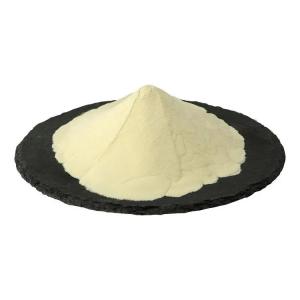
Powder Products Remain Commercially Important
Powder is currently an important phosphatidyl serine product format.
Recent market analysis estimates that powder represents the leading form segment, reflecting its compatibility with capsules, sachets, premixes, and other dry formulations.
This encourages manufacturers to focus on powder flowability, particle-size distribution, moisture control, dispersibility, and storage stability.
Product Formats Are Diversifying
Although powders remain important, the industry is also exploring a wider range of delivery formats.
Phosphatidyl serine can be incorporated into capsules, softgels, powdered blends, beverages, gummies, bars, and other formulated products.
Different formats require different ingredient characteristics, encouraging suppliers to develop application-specific grades rather than relying on a single standardized material.
Clean-Label Concepts Influence Product Development
Clean-label considerations are increasingly influencing ingredient selection and formulation design.
For phosphatidyl serine, this includes greater attention to source transparency, recognizable raw materials, processing aids, carrier systems, and simplified formulations.
The trend encourages manufacturers to document their supply chains more carefully while developing production processes that are compatible with changing customer expectations.
Sustainable Sourcing Becomes a Strategic Issue
Sustainability is becoming more relevant throughout the phosphatidyl serine supply chain.
Plant-based feedstocks, renewable raw materials, optimized processing, and improved resource utilization are being considered as part of longer-term production strategies.
Sustainable sourcing can therefore influence not only marketing but also supplier selection, raw-material procurement, and manufacturing decisions.
Quality Control Becomes More Comprehensive
Quality management is evolving from simple specification testing toward more comprehensive characterization.
Manufacturers may need to monitor phosphatidyl serine content, phospholipid composition, moisture, oxidation-related parameters, particle characteristics, and other product attributes according to the intended application.
This creates greater demand for standardized analytical methods and stronger batch-traceability systems.
Traceability Gains Importance
As international ingredient supply chains become more complex, traceability is becoming an important competitive factor.
Manufacturers increasingly need to track raw-material sources, production batches, processing conditions, purification stages, packaging, and storage information.
Better traceability can help suppliers respond more efficiently to customer audits and quality investigations.
Application Markets Continue to Expand
Phosphatidyl serine is being incorporated into a growing range of functional food and nutritional formulations.
Market research identifies functional food and nutraceutical products as important application areas, while powder ingredients remain particularly relevant to concentrated formulations.
This creates opportunities for ingredient suppliers to cooperate more closely with finished-product manufacturers during formulation development.
Customized Ingredients Become More Valuable
As applications become more specialized, customized phosphatidyl serine products are becoming increasingly relevant.
Customers may request specific source materials, concentration ranges, particle characteristics, carrier systems, or physical properties.
Suppliers capable of adjusting their production and quality systems to these requirements can create greater differentiation than suppliers offering only standardized grades.
Supplier Capabilities Are Upgrading
Competition among phosphatidyl serine suppliers is increasingly based on more than production capacity.
Manufacturers are strengthening raw-material management, production control, analytical testing, technical documentation, and customer support.
This represents a transition from commodity-oriented ingredient supply toward technology-supported specialty ingredient services.
Regional Markets Are Developing Differently
Regional market development is not uniform.
Asia Pacific is identified by some 2026 market research as a leading regional market, while North America is projected to show strong growth in some forecasts. Differences in consumer preferences, supplement regulations, formulation practices, and distribution structures contribute to these regional variations.
Therefore, international suppliers need to consider regional requirements when developing products and documentation.
Supply Chain Optimization Continues
The phosphatidyl serine industry is also strengthening supply-chain management.
Stable access to phospholipid raw materials, consistent processing conditions, reliable packaging materials, and controlled transportation are increasingly important.
A stronger supply chain can reduce batch variability and provide customers with more predictable product availability.
Research and Development Becomes More Application-Oriented
Industry research is increasingly connected with practical formulation requirements.
Instead of focusing only on phosphatidyl serine production, researchers and manufacturers are examining powder engineering, dispersion, stability, compatibility with other ingredients, and finished-product processing.
This application-oriented approach can shorten the distance between laboratory research and commercial product development.
Advanced Formulation Technologies Create New Opportunities
Emerging formulation technologies may create additional opportunities for phosphatidyl serine.
Encapsulation, lipid-based carriers, controlled particle engineering, and advanced drying technologies are being investigated within the broader phospholipid field.
These technologies could provide new options for manufacturers seeking differentiated ingredient formats, although their commercial adoption will depend on cost, stability, manufacturing scalability, and regulatory considerations.
Sustainability and Efficiency May Develop Together
Future industry development is likely to combine sustainability with manufacturing efficiency.
Improved raw-material utilization, optimized enzymatic conversion, efficient purification, reduced processing losses, and better drying processes can potentially reduce resource consumption while improving production consistency.
This makes process optimization an important part of both economic and environmental development.
Digital Quality Management Expands
Digital systems can provide additional support for phosphatidyl serine manufacturing.
Production data, raw-material records, analytical results, batch information, and storage conditions can be integrated into digital quality-management systems.
Such systems can improve traceability and help manufacturers identify process deviations more quickly.
Industry Competition Becomes More Technology-Driven
As the market develops, competition is likely to become increasingly technology-oriented.
Suppliers with strong capabilities in plant-based raw materials, enzymatic production, purification, powder engineering, analytical testing, and application support may have greater opportunities to differentiate their products.
Price will remain relevant, but consistent quality and technical support can become increasingly important purchasing considerations.
Future Industry Trends
The future phosphatidyl serine industry is likely to develop around several interconnected directions: plant-based sourcing, cleaner production, enzymatic processing, customized product formats, advanced quality control, sustainable supply chains, and application-specific formulation support.
At the same time, manufacturers will need to balance innovation with cost control, regulatory requirements, production scalability, and long-term supply stability.
Conclusion
Phosphatidyl serine industry trends are evolving from conventional ingredient production toward a more diversified and technology-oriented model.
Plant-derived sources, powder products, enzymatic manufacturing, clean-label concepts, sustainable sourcing, customized formulations, and stronger quality-management systems are becoming increasingly important areas of industry development.
As the market continues to develop, successful phosphatidyl serine suppliers will increasingly need to integrate raw-material management, production technology, analytical capabilities, formulation support, and supply-chain reliability. This integrated approach can provide a stronger foundation for continued industry development and product differentiation.
Market research published in 2026 indicates continued growth in the global phosphatidyl serine market, although individual research firms provide different market-size estimates and forecasting periods. Across these estimates, continued demand for phosphatidyl serine in functional food, nutritional products, and dietary supplement formulations remains an important development factor.
Plant-Based Sources Gain Greater Attention
One of the clearest industry trends is the increasing attention given to plant-derived phosphatidyl serine.
Soybean lecithin and sunflower lecithin provide established phospholipid feedstocks for phosphatidyl serine production. Plant-derived sources also allow manufacturers to develop products that fit vegetarian, plant-oriented, and source-transparency requirements.
The expansion of plant-based production is therefore influencing both raw-material sourcing and downstream product positioning.
Raw Material Diversification Continues
The industry is gradually moving toward a more diversified raw-material strategy.
Different phospholipid feedstocks can have different composition profiles and processing characteristics. Manufacturers therefore need to evaluate raw materials according to phosphatidylcholine content, fatty acid composition, impurity profile, storage characteristics, and batch consistency.
More detailed raw-material management can provide a stronger foundation for stable production.
Enzymatic Production Remains Important
Enzymatic transphosphatidylation is an established production route for phosphatidyl serine.
In a documented manufacturing process, phosphatidylcholine-enriched soybean lecithin is reacted with L-serine in the presence of phospholipase D, followed by separation, purification, drying, and blending.
This production concept continues to support the development of plant-derived phosphatidyl serine and provides opportunities for further process optimization.
Production Technology Becomes More Refined
Industry development is shifting from simply increasing production capacity toward improving process consistency.
Manufacturers are paying greater attention to reaction control, purification efficiency, drying conditions, particle characteristics, and batch-to-batch consistency. Recent supplier-development reports also emphasize process optimization, equipment improvement, quality management, and supply stability.
These changes can help suppliers meet increasingly specific customer requirements.
Purification Technology Gains Importance
Phosphatidyl serine production involves multiple separation and purification steps.
The efficiency of purification can influence phospholipid composition, residual impurities, moisture characteristics, and final product quality.
As customers increasingly compare detailed product specifications, purification technology is becoming an important part of supplier differentiation.
Powder Products Remain Commercially Important
Powder is currently an important phosphatidyl serine product format.
Recent market analysis estimates that powder represents the leading form segment, reflecting its compatibility with capsules, sachets, premixes, and other dry formulations.
This encourages manufacturers to focus on powder flowability, particle-size distribution, moisture control, dispersibility, and storage stability.
Product Formats Are Diversifying
Although powders remain important, the industry is also exploring a wider range of delivery formats.
Phosphatidyl serine can be incorporated into capsules, softgels, powdered blends, beverages, gummies, bars, and other formulated products.
Different formats require different ingredient characteristics, encouraging suppliers to develop application-specific grades rather than relying on a single standardized material.
Clean-Label Concepts Influence Product Development
Clean-label considerations are increasingly influencing ingredient selection and formulation design.
For phosphatidyl serine, this includes greater attention to source transparency, recognizable raw materials, processing aids, carrier systems, and simplified formulations.
The trend encourages manufacturers to document their supply chains more carefully while developing production processes that are compatible with changing customer expectations.
Sustainable Sourcing Becomes a Strategic Issue
Sustainability is becoming more relevant throughout the phosphatidyl serine supply chain.
Plant-based feedstocks, renewable raw materials, optimized processing, and improved resource utilization are being considered as part of longer-term production strategies.
Sustainable sourcing can therefore influence not only marketing but also supplier selection, raw-material procurement, and manufacturing decisions.
Quality Control Becomes More Comprehensive
Quality management is evolving from simple specification testing toward more comprehensive characterization.
Manufacturers may need to monitor phosphatidyl serine content, phospholipid composition, moisture, oxidation-related parameters, particle characteristics, and other product attributes according to the intended application.
This creates greater demand for standardized analytical methods and stronger batch-traceability systems.
Traceability Gains Importance
As international ingredient supply chains become more complex, traceability is becoming an important competitive factor.
Manufacturers increasingly need to track raw-material sources, production batches, processing conditions, purification stages, packaging, and storage information.
Better traceability can help suppliers respond more efficiently to customer audits and quality investigations.
Application Markets Continue to Expand
Phosphatidyl serine is being incorporated into a growing range of functional food and nutritional formulations.
Market research identifies functional food and nutraceutical products as important application areas, while powder ingredients remain particularly relevant to concentrated formulations.
This creates opportunities for ingredient suppliers to cooperate more closely with finished-product manufacturers during formulation development.
Customized Ingredients Become More Valuable
As applications become more specialized, customized phosphatidyl serine products are becoming increasingly relevant.
Customers may request specific source materials, concentration ranges, particle characteristics, carrier systems, or physical properties.
Suppliers capable of adjusting their production and quality systems to these requirements can create greater differentiation than suppliers offering only standardized grades.
Supplier Capabilities Are Upgrading
Competition among phosphatidyl serine suppliers is increasingly based on more than production capacity.
Manufacturers are strengthening raw-material management, production control, analytical testing, technical documentation, and customer support.
This represents a transition from commodity-oriented ingredient supply toward technology-supported specialty ingredient services.
Regional Markets Are Developing Differently
Regional market development is not uniform.
Asia Pacific is identified by some 2026 market research as a leading regional market, while North America is projected to show strong growth in some forecasts. Differences in consumer preferences, supplement regulations, formulation practices, and distribution structures contribute to these regional variations.
Therefore, international suppliers need to consider regional requirements when developing products and documentation.
Supply Chain Optimization Continues
The phosphatidyl serine industry is also strengthening supply-chain management.
Stable access to phospholipid raw materials, consistent processing conditions, reliable packaging materials, and controlled transportation are increasingly important.
A stronger supply chain can reduce batch variability and provide customers with more predictable product availability.
Research and Development Becomes More Application-Oriented
Industry research is increasingly connected with practical formulation requirements.
Instead of focusing only on phosphatidyl serine production, researchers and manufacturers are examining powder engineering, dispersion, stability, compatibility with other ingredients, and finished-product processing.
This application-oriented approach can shorten the distance between laboratory research and commercial product development.
Advanced Formulation Technologies Create New Opportunities
Emerging formulation technologies may create additional opportunities for phosphatidyl serine.
Encapsulation, lipid-based carriers, controlled particle engineering, and advanced drying technologies are being investigated within the broader phospholipid field.
These technologies could provide new options for manufacturers seeking differentiated ingredient formats, although their commercial adoption will depend on cost, stability, manufacturing scalability, and regulatory considerations.
Sustainability and Efficiency May Develop Together
Future industry development is likely to combine sustainability with manufacturing efficiency.
Improved raw-material utilization, optimized enzymatic conversion, efficient purification, reduced processing losses, and better drying processes can potentially reduce resource consumption while improving production consistency.
This makes process optimization an important part of both economic and environmental development.
Digital Quality Management Expands
Digital systems can provide additional support for phosphatidyl serine manufacturing.
Production data, raw-material records, analytical results, batch information, and storage conditions can be integrated into digital quality-management systems.
Such systems can improve traceability and help manufacturers identify process deviations more quickly.
Industry Competition Becomes More Technology-Driven
As the market develops, competition is likely to become increasingly technology-oriented.
Suppliers with strong capabilities in plant-based raw materials, enzymatic production, purification, powder engineering, analytical testing, and application support may have greater opportunities to differentiate their products.
Price will remain relevant, but consistent quality and technical support can become increasingly important purchasing considerations.
Future Industry Trends
The future phosphatidyl serine industry is likely to develop around several interconnected directions: plant-based sourcing, cleaner production, enzymatic processing, customized product formats, advanced quality control, sustainable supply chains, and application-specific formulation support.
At the same time, manufacturers will need to balance innovation with cost control, regulatory requirements, production scalability, and long-term supply stability.
Conclusion
Phosphatidyl serine industry trends are evolving from conventional ingredient production toward a more diversified and technology-oriented model.
Plant-derived sources, powder products, enzymatic manufacturing, clean-label concepts, sustainable sourcing, customized formulations, and stronger quality-management systems are becoming increasingly important areas of industry development.
As the market continues to develop, successful phosphatidyl serine suppliers will increasingly need to integrate raw-material management, production technology, analytical capabilities, formulation support, and supply-chain reliability. This integrated approach can provide a stronger foundation for continued industry development and product differentiation.
Previous:Phosphatidyl serine stability research progresses
Next:None