
 CN
CN
News list
News Center





News
Phosphatidyl serine product innovation continues
Time:2026-10-16
Phosphatidyl serine continues to attract attention in the nutritional ingredient industry because of its distinctive phospholipid structure and compatibility with a variety of formulation systems. As manufacturers seek more differentiated nutritional products, innovation is increasingly moving beyond the basic phosphatidyl serine ingredient toward improved formats, processing technologies, stability, and formulation flexibility.
Recent research and product development activities indicate that phosphatidyl serine innovation is taking place across the entire value chain, from enzymatic production and purification to powder engineering and finished-product formulation.
Innovation in Raw Material Sources
Raw material selection remains an important part of phosphatidyl serine product development.
Plant-derived phospholipid sources, particularly soybean and sunflower materials, provide manufacturers with options for developing products suited to different formulation requirements. The selection of starting phospholipids can influence composition, purification requirements, processing conditions, and the characteristics of the final ingredient.
As product portfolios become more diversified, manufacturers are expected to pay greater attention to source traceability and raw material consistency.
Enzymatic Production Technology Advances
Enzymatic transphosphatidylation is an important research direction for phosphatidyl serine production.
A 2026 study reported rational engineering of phospholipase D to improve catalytic performance. The engineered enzyme achieved high phosphatidyl serine conversion in a five-liter fermentation system, demonstrating the potential of enzyme engineering for improving production processes.
Such developments can support future efforts to improve process consistency, production efficiency, and scalability.
More Sustainable Production Routes
Sustainability is also becoming an important consideration in phosphatidyl serine manufacturing.
Research has explored edible oil-water systems as alternatives to conventional organic-solvent-based reaction systems. These approaches demonstrate the possibility of using milder and more environmentally compatible processing environments for enzymatic phosphatidyl serine production.
Future production innovation may therefore combine enzyme engineering with solvent-reduction strategies and improved downstream purification.
Powder Engineering Becomes More Important
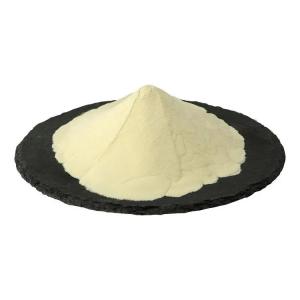
Phosphatidyl serine powder characteristics can strongly influence its performance during blending and formulation.
Particle size distribution, flowability, dispersion behavior, moisture control, and storage stability are increasingly important product-development considerations. Recent patent activity has focused on phosphatidyl serine powders with controlled particle-size distributions designed to improve homogeneity and dispersion in nutritional formulations.
This demonstrates how powder engineering can become a product-differentiation strategy rather than simply a manufacturing step.
Improved Dispersion in Formulations
Poor dispersion can create difficulties when phosphatidyl serine is incorporated into beverages, powdered nutritional products, gummies, bars, and other food formats.
Product developers are therefore exploring particle engineering, carrier systems, drying technologies, and formulation aids to improve dispersion.
More uniform distribution can simplify downstream processing and provide manufacturers with greater flexibility when designing finished products.
New Delivery Formats
Traditional phosphatidyl serine products have commonly been developed in capsules and tablets, but product innovation is expanding into powders, beverages, gummies, bars, sachets, and other convenient formats.
Different formats require different physical characteristics. A powder intended for beverage applications may require good dispersibility, while a gummy formulation may require compatibility with the texture and structural properties of the finished matrix.
This encourages ingredient manufacturers to develop format-specific phosphatidyl serine preparations.
Lipid-Based Formulation Innovation
Lipid-based systems represent another emerging direction.
A 2026 study reported a phosphatidyl serine formulation using a catechin-complexed lipid nanocarrier system, with spray drying used to produce the final preparation. The research illustrates how nanostructured lipid systems can be investigated as platforms for improving physicochemical characteristics and formulation stability.
Such research may encourage further development of specialized phospholipid delivery systems.
Spray Drying Technology
Spray drying provides a practical route for converting liquid or dispersed phospholipid systems into powders.
Process parameters such as feed composition, drying conditions, carrier selection, inlet and outlet conditions, and particle formation can influence the properties of the resulting ingredient.
For phosphatidyl serine manufacturers, optimizing spray drying can help create powders with improved handling and better compatibility with different finished-product systems.
Stability-Oriented Product Development
Stability remains a central consideration for phosphatidyl serine products.
Oxidation, moisture, temperature, light exposure, and interactions with other formulation components can affect phospholipid quality during storage.
As a result, new product development increasingly incorporates stability evaluation during the early formulation stage rather than treating stability testing as a final quality-control procedure.
Combination Formulations
Another direction is the combination of phosphatidyl serine with other nutritional ingredients.
Developers can investigate combinations involving phospholipids, botanical ingredients, proteins, vitamins, minerals, and other food-compatible components. The objective is to create differentiated formulations with appropriate physical stability and processing characteristics.
This trend is particularly relevant for manufacturers seeking multifunctional product concepts.
Clean-Label Formulation Opportunities
Clean-label trends are influencing ingredient selection across the nutrition industry.
Phosphatidyl serine manufacturers can respond by optimizing carrier systems, simplifying excipient compositions, and developing formulations with clearly defined ingredient sources.
Enzymatic production and plant-derived raw materials may also support product positioning focused on transparent sourcing and modern manufacturing processes.
Customized Phosphatidyl Serine Products
Customization is becoming increasingly important as downstream manufacturers work with different product categories.
A supplier may need to provide different powder properties, phosphatidyl serine concentrations, particle-size distributions, dispersion characteristics, or carrier systems according to the application.
This creates opportunities for ingredient manufacturers to move from standardized raw-material sales toward application-specific product development.
Quality Control Innovation
Product innovation also requires stronger analytical support.
Modern phosphatidyl serine quality programs can combine chromatographic analysis with physicochemical characterization to evaluate phospholipid composition, purity, moisture, oxidation-related indicators, particle characteristics, and batch consistency.
Consistent analytical procedures are particularly important when new processing technologies or alternative raw material sources are introduced.
Process Scale-Up
Laboratory innovation must eventually be translated into commercially practical manufacturing.
Enzyme production, transphosphatidylation, purification, drying, milling, and blending all need to remain stable during scale-up.
Recent enzyme-engineering research reaching a five-liter fermentation scale illustrates the increasing attention being given to bridging laboratory development and larger-scale phosphatidyl serine production.
Digital Formulation Development
Digital technologies may further accelerate phosphatidyl serine product innovation.
Data-driven formulation screening can help manufacturers compare processing conditions, predict ingredient interactions, and optimize formulation parameters.
More broadly, recent phospholipid research is increasingly connecting computational methods, synthetic biology, and structure-based design with food and ingredient development.
Stability Prediction and Process Optimization
Future formulation development may increasingly use predictive models to evaluate storage behavior and processing performance.
Machine-learning approaches are already being explored in broader phospholipid and food-liposome research for formulation optimization, preparation control, and stability prediction.
These approaches could eventually support faster screening of phosphatidyl serine formulations and reduce the number of experimental iterations required.
Sustainable Manufacturing
Sustainability is likely to remain a long-term innovation theme.
Manufacturers can explore lower-solvent processes, enzyme reuse, improved raw-material utilization, reduced energy consumption, and optimized purification.
Combining these approaches with plant-derived feedstocks could provide additional opportunities for developing more resource-efficient phosphatidyl serine production systems.
Application-Specific Product Development
The future phosphatidyl serine market is likely to contain increasingly specialized products.
Different formulations may be developed specifically for powders, beverages, soft gels, gummies, nutrition bars, dairy-based products, plant-based products, and other food or nutritional formats.
Instead of using one standard ingredient across all applications, manufacturers can develop product specifications around the processing requirements of each application.
Competitive Differentiation Through Technology
As phosphatidyl serine becomes more widely available, technological differentiation will become increasingly important.
Manufacturers with advantages in enzyme engineering, raw material control, purification, powder processing, formulation development, and analytical testing may be better positioned to provide differentiated products.
This means future competition will increasingly involve the complete production and application chain rather than only the phosphatidyl serine content of the final ingredient.
Future Development Trends
Phosphatidyl serine product innovation is moving toward greater specialization, improved processing flexibility, more sustainable manufacturing, and better formulation compatibility.
Key development areas include enzymatic production, controlled particle engineering, advanced drying technologies, lipid-based formulation systems, customized powders, combination formulations, stability optimization, and data-driven process development.
As these technologies continue to mature, phosphatidyl serine manufacturers will have more opportunities to develop application-specific products and create new value through formulation and manufacturing innovation.
Conclusion
Phosphatidyl serine product innovation continues across raw material selection, enzymatic production, powder engineering, formulation design, stability control, and sustainable manufacturing.
Recent research on engineered phospholipase D, controlled phosphatidyl serine powders, and advanced lipid-based formulations demonstrates that innovation is no longer limited to the production of the basic ingredient.
Going forward, manufacturers that combine consistent raw-material quality, scalable production technology, advanced formulation capabilities, and application-specific product development will have more opportunities to differentiate phosphatidyl serine products in the expanding nutrition ingredient market.
Recent research and product development activities indicate that phosphatidyl serine innovation is taking place across the entire value chain, from enzymatic production and purification to powder engineering and finished-product formulation.
Innovation in Raw Material Sources
Raw material selection remains an important part of phosphatidyl serine product development.
Plant-derived phospholipid sources, particularly soybean and sunflower materials, provide manufacturers with options for developing products suited to different formulation requirements. The selection of starting phospholipids can influence composition, purification requirements, processing conditions, and the characteristics of the final ingredient.
As product portfolios become more diversified, manufacturers are expected to pay greater attention to source traceability and raw material consistency.
Enzymatic Production Technology Advances
Enzymatic transphosphatidylation is an important research direction for phosphatidyl serine production.
A 2026 study reported rational engineering of phospholipase D to improve catalytic performance. The engineered enzyme achieved high phosphatidyl serine conversion in a five-liter fermentation system, demonstrating the potential of enzyme engineering for improving production processes.
Such developments can support future efforts to improve process consistency, production efficiency, and scalability.
More Sustainable Production Routes
Sustainability is also becoming an important consideration in phosphatidyl serine manufacturing.
Research has explored edible oil-water systems as alternatives to conventional organic-solvent-based reaction systems. These approaches demonstrate the possibility of using milder and more environmentally compatible processing environments for enzymatic phosphatidyl serine production.
Future production innovation may therefore combine enzyme engineering with solvent-reduction strategies and improved downstream purification.
Powder Engineering Becomes More Important
Phosphatidyl serine powder characteristics can strongly influence its performance during blending and formulation.
Particle size distribution, flowability, dispersion behavior, moisture control, and storage stability are increasingly important product-development considerations. Recent patent activity has focused on phosphatidyl serine powders with controlled particle-size distributions designed to improve homogeneity and dispersion in nutritional formulations.
This demonstrates how powder engineering can become a product-differentiation strategy rather than simply a manufacturing step.
Improved Dispersion in Formulations
Poor dispersion can create difficulties when phosphatidyl serine is incorporated into beverages, powdered nutritional products, gummies, bars, and other food formats.
Product developers are therefore exploring particle engineering, carrier systems, drying technologies, and formulation aids to improve dispersion.
More uniform distribution can simplify downstream processing and provide manufacturers with greater flexibility when designing finished products.
New Delivery Formats
Traditional phosphatidyl serine products have commonly been developed in capsules and tablets, but product innovation is expanding into powders, beverages, gummies, bars, sachets, and other convenient formats.
Different formats require different physical characteristics. A powder intended for beverage applications may require good dispersibility, while a gummy formulation may require compatibility with the texture and structural properties of the finished matrix.
This encourages ingredient manufacturers to develop format-specific phosphatidyl serine preparations.
Lipid-Based Formulation Innovation
Lipid-based systems represent another emerging direction.
A 2026 study reported a phosphatidyl serine formulation using a catechin-complexed lipid nanocarrier system, with spray drying used to produce the final preparation. The research illustrates how nanostructured lipid systems can be investigated as platforms for improving physicochemical characteristics and formulation stability.
Such research may encourage further development of specialized phospholipid delivery systems.
Spray Drying Technology
Spray drying provides a practical route for converting liquid or dispersed phospholipid systems into powders.
Process parameters such as feed composition, drying conditions, carrier selection, inlet and outlet conditions, and particle formation can influence the properties of the resulting ingredient.
For phosphatidyl serine manufacturers, optimizing spray drying can help create powders with improved handling and better compatibility with different finished-product systems.
Stability-Oriented Product Development
Stability remains a central consideration for phosphatidyl serine products.
Oxidation, moisture, temperature, light exposure, and interactions with other formulation components can affect phospholipid quality during storage.
As a result, new product development increasingly incorporates stability evaluation during the early formulation stage rather than treating stability testing as a final quality-control procedure.
Combination Formulations
Another direction is the combination of phosphatidyl serine with other nutritional ingredients.
Developers can investigate combinations involving phospholipids, botanical ingredients, proteins, vitamins, minerals, and other food-compatible components. The objective is to create differentiated formulations with appropriate physical stability and processing characteristics.
This trend is particularly relevant for manufacturers seeking multifunctional product concepts.
Clean-Label Formulation Opportunities
Clean-label trends are influencing ingredient selection across the nutrition industry.
Phosphatidyl serine manufacturers can respond by optimizing carrier systems, simplifying excipient compositions, and developing formulations with clearly defined ingredient sources.
Enzymatic production and plant-derived raw materials may also support product positioning focused on transparent sourcing and modern manufacturing processes.
Customized Phosphatidyl Serine Products
Customization is becoming increasingly important as downstream manufacturers work with different product categories.
A supplier may need to provide different powder properties, phosphatidyl serine concentrations, particle-size distributions, dispersion characteristics, or carrier systems according to the application.
This creates opportunities for ingredient manufacturers to move from standardized raw-material sales toward application-specific product development.
Quality Control Innovation
Product innovation also requires stronger analytical support.
Modern phosphatidyl serine quality programs can combine chromatographic analysis with physicochemical characterization to evaluate phospholipid composition, purity, moisture, oxidation-related indicators, particle characteristics, and batch consistency.
Consistent analytical procedures are particularly important when new processing technologies or alternative raw material sources are introduced.
Process Scale-Up
Laboratory innovation must eventually be translated into commercially practical manufacturing.
Enzyme production, transphosphatidylation, purification, drying, milling, and blending all need to remain stable during scale-up.
Recent enzyme-engineering research reaching a five-liter fermentation scale illustrates the increasing attention being given to bridging laboratory development and larger-scale phosphatidyl serine production.
Digital Formulation Development
Digital technologies may further accelerate phosphatidyl serine product innovation.
Data-driven formulation screening can help manufacturers compare processing conditions, predict ingredient interactions, and optimize formulation parameters.
More broadly, recent phospholipid research is increasingly connecting computational methods, synthetic biology, and structure-based design with food and ingredient development.
Stability Prediction and Process Optimization
Future formulation development may increasingly use predictive models to evaluate storage behavior and processing performance.
Machine-learning approaches are already being explored in broader phospholipid and food-liposome research for formulation optimization, preparation control, and stability prediction.
These approaches could eventually support faster screening of phosphatidyl serine formulations and reduce the number of experimental iterations required.
Sustainable Manufacturing
Sustainability is likely to remain a long-term innovation theme.
Manufacturers can explore lower-solvent processes, enzyme reuse, improved raw-material utilization, reduced energy consumption, and optimized purification.
Combining these approaches with plant-derived feedstocks could provide additional opportunities for developing more resource-efficient phosphatidyl serine production systems.
Application-Specific Product Development
The future phosphatidyl serine market is likely to contain increasingly specialized products.
Different formulations may be developed specifically for powders, beverages, soft gels, gummies, nutrition bars, dairy-based products, plant-based products, and other food or nutritional formats.
Instead of using one standard ingredient across all applications, manufacturers can develop product specifications around the processing requirements of each application.
Competitive Differentiation Through Technology
As phosphatidyl serine becomes more widely available, technological differentiation will become increasingly important.
Manufacturers with advantages in enzyme engineering, raw material control, purification, powder processing, formulation development, and analytical testing may be better positioned to provide differentiated products.
This means future competition will increasingly involve the complete production and application chain rather than only the phosphatidyl serine content of the final ingredient.
Future Development Trends
Phosphatidyl serine product innovation is moving toward greater specialization, improved processing flexibility, more sustainable manufacturing, and better formulation compatibility.
Key development areas include enzymatic production, controlled particle engineering, advanced drying technologies, lipid-based formulation systems, customized powders, combination formulations, stability optimization, and data-driven process development.
As these technologies continue to mature, phosphatidyl serine manufacturers will have more opportunities to develop application-specific products and create new value through formulation and manufacturing innovation.
Conclusion
Phosphatidyl serine product innovation continues across raw material selection, enzymatic production, powder engineering, formulation design, stability control, and sustainable manufacturing.
Recent research on engineered phospholipase D, controlled phosphatidyl serine powders, and advanced lipid-based formulations demonstrates that innovation is no longer limited to the production of the basic ingredient.
Going forward, manufacturers that combine consistent raw-material quality, scalable production technology, advanced formulation capabilities, and application-specific product development will have more opportunities to differentiate phosphatidyl serine products in the expanding nutrition ingredient market.