
 CN
News list
News Center





News
Phosphatidyl serine product development advances
Time:2026-11-03
Phosphatidyl serine product development is progressing as ingredient manufacturers explore new production methods, formulation strategies, and quality management approaches. As a phospholipid ingredient used in dietary supplements, food formulations, and specialized ingredient systems, phosphatidyl serine requires careful consideration of raw material sources, composition, processing characteristics, and storage conditions. Continuous product development enables manufacturers to respond to changing market expectations and diversify their product portfolios.
Diversification of Raw Material Sources
Raw material selection is a fundamental aspect of phosphatidyl serine product development. Manufacturers are evaluating different source materials and processing pathways to improve supply flexibility and achieve consistent product specifications. Plant-derived sources have attracted particular interest as manufacturers explore alternative sourcing options and adapt their production strategies.
Differences in raw material composition can influence processing requirements and the characteristics of the final ingredient. For this reason, systematic raw material evaluation, standardized preparation procedures, and effective supplier management are important components of product development.
Improvements in Product Specifications
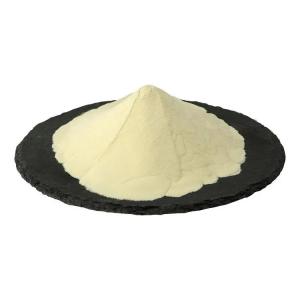
The refinement of product specifications is another important development direction. Manufacturers are paying closer attention to ingredient composition, purity, moisture content, physical appearance, and batch consistency. Establishing clear specifications helps ensure that products meet the requirements of different customers and application environments.
Analytical testing and standardized quality assessment procedures support this process. By monitoring relevant quality indicators throughout production, manufacturers can identify variations and make appropriate adjustments to processing conditions. Consistent specifications also facilitate communication between ingredient suppliers and downstream manufacturers.
Formulation and Physical Property Optimization
Product development increasingly focuses on improving the physical characteristics of phosphatidyl serine ingredients. Particle size, powder flowability, dispersibility, and moisture sensitivity can influence handling, blending, packaging, and incorporation into finished formulations.
Manufacturers may investigate drying methods, particle processing technologies, and blending procedures to obtain physical properties suited to specific applications. Formulation compatibility is equally important when phosphatidyl serine is combined with other ingredients. Evaluating interactions among components can help improve blend uniformity and support consistent manufacturing performance.
Packaging and Storage Improvements
Packaging development is an essential part of maintaining phosphatidyl serine product quality. Because phospholipid ingredients can be sensitive to environmental conditions, manufacturers need to evaluate moisture exposure, oxygen contact, light exposure, and temperature during storage and transportation.
Appropriate barrier materials and reliable sealing methods can help protect product characteristics throughout distribution. Packaging specifications should be selected according to the ingredient's properties, expected storage period, transportation conditions, and intended use. Clear storage instructions and effective inventory management further support product consistency.
Expansion of Application-Specific Products
Different application sectors may require different ingredient specifications and physical characteristics. Consequently, phosphatidyl serine product development is increasingly oriented toward application-specific solutions rather than relying on a single standardized product format.
Manufacturers can evaluate variations in composition, particle characteristics, packaging size, and formulation compatibility to address different customer requirements. Close cooperation with downstream users can also help identify practical processing challenges and guide the development of more suitable ingredient options.
Manufacturing Efficiency and Quality Management
Advances in manufacturing technology are supporting more systematic phosphatidyl serine product development. Process monitoring, automated production controls, and improved analytical methods can help reduce variation between batches and improve production planning.
Integrating quality management into each stage of development is particularly important. Raw material inspection, in-process testing, finished-product evaluation, and traceable documentation provide a structured basis for maintaining consistent specifications. These practices also help manufacturers assess whether new formulations and production methods are suitable for commercial-scale manufacturing.
Future Trends in Product Development
Future developments in phosphatidyl serine products are likely to emphasize specification refinement, improved physical stability, flexible packaging solutions, and more efficient manufacturing processes. Continued progress in analytical technology may also help manufacturers characterize products more precisely and respond to increasingly differentiated customer requirements.
Sustainability and supply-chain flexibility are expected to remain relevant considerations. Manufacturers that balance product consistency, production efficiency, material sourcing, and application requirements can build a stronger foundation for long-term product development.
Conclusion
Phosphatidyl serine product development is advancing through improvements in raw material selection, product specifications, formulation design, packaging, and manufacturing quality management. These developments help manufacturers create more consistent and application-oriented ingredient products. With continued investment in process optimization and quality assurance, the industry can further strengthen product adaptability and respond to evolving market needs.