
 CN
News list
News Center





News
Phosphatidyl serine product lines expand
Time:2026-10-28
1. Product Portfolio Expansion Becomes a Market Trend
The phosphatidyl serine market is experiencing continued product development as manufacturers respond to changing customer requirements and expanding application scenarios. Rather than offering only a limited range of standard ingredients, suppliers are increasingly exploring diversified product lines with different specifications, raw material sources, concentrations, and physical characteristics.
This trend reflects the needs of dietary supplement producers, functional food manufacturers, ingredient distributors, and formulation developers. Different customers may have distinct requirements for ingredient handling, production compatibility, packaging, and quality documentation.
Expanding product lines allows manufacturers to serve a broader customer base while creating opportunities for product differentiation and long-term business development.
2. Diversification of Product Specifications
Product specifications are an important starting point for portfolio expansion. Manufacturers may develop multiple grades according to phosphatidyl serine content, purity requirements, moisture limits, appearance, and other measurable quality parameters.
A clearly differentiated specification system helps customers identify suitable ingredients for their intended production processes. It also supports more efficient supplier evaluation and product qualification.
However, different grades should be supported by appropriate testing methods and documented quality standards. Consistency between product labels, technical data sheets, and actual batch results is essential for maintaining customer confidence.
By offering clearly defined specifications, manufacturers can provide greater purchasing flexibility without creating unnecessary complexity in product selection.
3. Exploring Different Raw Material Sources
Raw material sourcing is another area of product line development. Phosphatidyl serine ingredients may be produced using different source materials and manufacturing approaches, depending on the supplier's technology and product design.
Soy-derived and sunflower-derived phospholipid materials are examples of sourcing options that may be relevant to particular product portfolios. Their suitability depends on the production process, ingredient composition, allergen considerations, customer preferences, and applicable market requirements.
Manufacturers expanding into new sourcing categories should establish appropriate controls for raw material identity, traceability, composition, and batch consistency. Source-related claims should be supported by reliable documentation.
Providing transparent sourcing information enables customers to evaluate ingredient options more effectively and select products aligned with their formulation and labeling requirements.
4. Development of Different Physical Forms
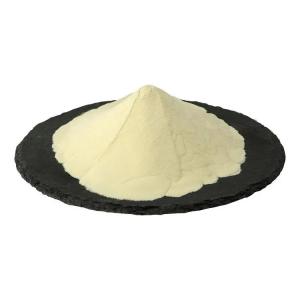
Physical form can influence how phosphatidyl serine is handled during manufacturing. Depending on the production process, suppliers may offer powder-based ingredients or other formats designed for particular processing requirements.
Powder characteristics such as particle size distribution, flowability, moisture content, and dispersibility may affect weighing, blending, encapsulation, and incorporation into finished products. These characteristics should therefore be evaluated alongside the ingredient's chemical composition.
Manufacturers can expand their portfolios by optimizing physical properties for different production environments. Any claimed improvement should be verified under relevant testing conditions rather than assumed from appearance alone.
A well-designed range of physical forms can help customers select ingredients that fit existing equipment and processing procedures.
5. Adaptation to Dietary Supplement Applications
Dietary supplements represent an important application area for phosphatidyl serine ingredients. Manufacturers may serve producers of capsules, tablets, powders, and other supplement formats, each with different formulation and processing considerations.
For capsule and tablet production, ingredient consistency and compatibility with other formulation components may be important. Powder formulations may place greater emphasis on blending uniformity, handling, and moisture management.
Suppliers can support these applications by providing suitable specifications, technical documentation, and formulation guidance. Close communication with customers also helps identify opportunities to refine existing grades or introduce new products.
Product development should account for the regulatory requirements of the intended market and the specific claims permitted for the finished product.
6. Expansion into Functional Food Formulations
In addition to supplements, phosphatidyl serine may be considered for selected functional food formulations. Incorporating the ingredient into a food matrix can introduce technical challenges involving taste, processing temperature, ingredient interactions, dispersion, and storage stability.
These factors can vary significantly between dry mixes, beverage powders, bars, and other food formats. As a result, a single ingredient grade may not be equally suitable for every application.
Manufacturers seeking to serve this market can develop application-specific technical guidance and conduct compatibility assessments with common formulation components. Pilot-scale trials may help identify suitable addition methods and processing conditions.
A broader product portfolio supported by application data can make ingredient selection more efficient for food developers.
7. Strengthening Quality Management Across Product Lines
As the number of products increases, quality management becomes more complex. Manufacturers need to ensure that each grade has clear acceptance criteria, appropriate analytical methods, and reliable batch records.
Key considerations may include ingredient identity, phosphatidyl serine content, moisture, relevant impurities, microbiological specifications where applicable, and packaging integrity. Testing requirements should reflect the product's characteristics and intended use.
Document control is equally important. Specifications, certificates of analysis, storage instructions, and product descriptions should remain consistent across sales channels and distribution partners.
A standardized quality framework helps companies manage a larger portfolio while minimizing confusion between similar products.
8. Packaging and Storage Options Become More Diverse
Packaging requirements can differ according to product volume, transportation distance, customer production scale, and storage conditions. Smaller packages may suit research, sampling, or low-volume manufacturing, while larger packaging formats may be more practical for industrial users.
Moisture protection, sealing performance, material compatibility, and packaging integrity should be evaluated when selecting a suitable format. Storage instructions should be based on available stability data and should clearly identify relevant environmental conditions.
By offering appropriate packaging options and consistent storage guidance, suppliers can improve handling convenience and support customers with different purchasing patterns.
9. Commercial Opportunities and Portfolio Management
Expanding product lines can create opportunities to enter new customer segments, strengthen distributor relationships, and improve market coverage. However, adding more products also increases demands on inventory, testing, documentation, and production planning.
Manufacturers should evaluate potential demand before launching new grades. Customer interviews, application trials, distributor feedback, and sales data can help identify the products with the strongest commercial potential.
A structured portfolio strategy can separate core products from specialized grades and emerging development projects. This approach helps companies allocate resources while avoiding excessive duplication among similar offerings.
Product line expansion is most effective when each new item addresses a clearly defined customer requirement.
10. Future Development of Phosphatidyl Serine Product Lines
Future portfolio development is likely to emphasize specification transparency, application-oriented design, dependable sourcing, and improved quality consistency. Manufacturers may also place greater attention on production efficiency, traceability, and technical support as customer qualification processes become more detailed.
Digital product documentation and more systematic customer feedback management can help suppliers respond to changing requirements. Meanwhile, collaboration with downstream manufacturers can reveal new opportunities for specialized ingredients and tailored packaging.
Conclusion
The expansion of phosphatidyl serine product lines reflects a broader shift toward more differentiated ingredient supply. By developing clearly specified grades, evaluating alternative raw material sources, optimizing physical characteristics, and supporting diverse applications, manufacturers can respond more effectively to customer needs.
Successful expansion depends not simply on increasing the number of products, but on maintaining quality, documenting specifications, and ensuring that every product serves a meaningful market purpose. A balanced approach to portfolio planning can help phosphatidyl serine suppliers strengthen competitiveness and establish sustainable business relationships.