
 CN



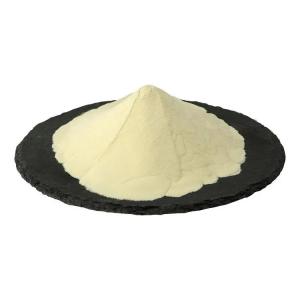


Phosphatidylserine 51446-62-9 Factory
Time:2026-10-28Product Overview
Phosphatidylserine (PS) from Lixing is a sunflower-lecithin-derived phospholipid ingredient supplied to dietary supplement manufacturers who need a soy-allergen-free, enzyme-synthesized PS with verified ≥50.0% HPLC assay and stable batch-to-batch composition for cognitive health formulations.
Core Selling Points
Batch-level HPLC verification: Every released batch is tested individually by HPLC rather than by representative sampling; assay results land at 50.0% ± 1.5% with an inter-batch RSD of ≤3%, letting formulators cite actual release data rather than supplier averages in finished product specifications.Solvent-free enzymatic production: The conversion from lecithin to PS uses microbial phospholipase D; no hexane or ethanol enters the process, and residual solvents remain below the ICH Q3C quantification limit of 50 ppm, which simplifies regulatory review for EU and US submissions.
Soy-allergen-free positioning: The raw material is non-GMO sunflower lecithin grown in the EU; the finished powder tests below 2.5 ppm soy protein via ELISA (Akron Biotech kit), so brands can maintain a "soy-free" label claim without adding this ingredient to their allergen-control program.
Tablet- and capsule-friendly particle profile: The powder passes ≥95% through a 200 µm (80-mesh) screen with a bulk density of 0.48–0.56 g/mL, matching existing encapsulator and tablet press setups directly; no glidant adjust-ment or additional milling step is required when switching suppliers.
Scale for supply continuity: Annual capacity of 120 metric tons supports production cadences as tight as one 500 kg batch every 15 days; retained samples from each batch are stored for five years, making customer qualification audits simpler.
Technical Specifications
| Parameter | Value | Supplementary Note |
|---|---|---|
| Chemical name | Phosphatidylserine (PS) | CAS 51446-62-9 |
| Source | Non-GMO sunflower lecithin (EU) | Enzyme-converted; no organic solvents |
| PS content | ≥50.0% | Measured by HPLC; individual COA per batch |
| Residual phosphatidylcholine | ≤25.0% | Determined by HPLC-ELSD |
| Soy protein residue | <2.5 ppm | ELISA method, supports soy-free claims |
| Peroxide value | ≤2.0 meq/kg | Ph.Eur. 2.5.5 method |
| Moisture content | ≤2.0% | Karl Fischer; typical batch range 1.1–1.4% |
| Heavy metals | Pb ≤ 1.0 mg/kgAs ≤ 1.0 mg/kgHg ≤ 0.1 mg/kg | ICP-MS; meets Ph.Eur. 2.4.80 |
| Total aerobic microbial count | ≤1000 CFU/g | Ph.Eur. 2.6.12 |
| Total yeast and mould count | ≤100 CFU/g | Ph.Eur. 2.6.12 |
| Particle size | ≥95% through 80 mesh (180 µm) | Direct fill or direct compression |
| Bulk density | 0.48–0.56 g/mL | Tapped density 0.55–0.65 g/mL |
| Shelf life | 24 months from production date | Sealed, dark, stored below 25°C |
| Packaging | 20 kg multi-layer paper bags with PE inner liner | 800 bags per container (16 metric tons) |
Application Scenarios
R&D at supplement brands: Formulators testing cognitive-stack prototypes need a phospholipid raw material that behaves consistently in encapsulation trials; the uniform particle-size distribution of the 50% PS grade lets them validate capsule fill weights without repeated re-engineering.Contract manufacturing for private label: CMOs packaging focus formulas for multiple retail customers, with runs of 5,000 to 15,000 bottles, need to move from qualification sample to bulk delivery within a month; the 500 kg production cycle makes this timeline practical.
Allergen-controlled product lines: Brands releasing memory-support capsules with a soy-free promise can place this sunflower PS directly into the allergen matrix in the same way they would handle tapioca starch or cellulose, since the ingredient itself carries no soy-protein residue.
International product registration: Regulatory-affairs staff preparing finished-product submissions in Southeast Asia and Latin America require raw material documentation with test methods and stability conclusions; the dossier package includes the specification, batch analytical summaries, and a process-flow diagram supporting the 24-month shelf life.
Common Questions
What is the difference between sunflower and soy phosphatidylserine?
The functional PS molecule is identical. Sunflower lecithin introduces no soy protein residues, which matters for allergen labeling. The fatty-acid profile differs slightly between the two plant sources, but the PS fraction relevant to cognitive support is the same, so no formulation adjustment is needed.
How can a buyer confirm the 50% PS content claim?
Ask for the HPLC chromatogram attached to the COA. Every batch of the 50% PS grade has its own release document showing the PS peak integral, and a reference standard is run under identical conditions for comparison. A qualified third-party lab can verify the results in one session.
What dosage of phosphatidylserine is recommended in finished supplements?
Clinical studies on memory support typically use 100–300 mg PS per day. In a finished formula using the 50% PS grade, 200–600 mg of the ingredient per daily serving delivers that amount; keep processing losses below 3% of the label claim to remain within tolerance.
Does Lixing provide stability testing for registration?
Yes. Three production batches were placed on stability at 25°C/60% RH and 40°C/75% RH; 24-month real-time data and 6-month accelerated data are available under NDA. Stability summaries can be shared before the confidentiality agreement is signed, with the full report issued afterward.
What is the minimum order quantity for this phosphatidylserine grade?
500 kg for one standard batch. For sample orders, 500 g is available once per customer with a corporate address; repeat bulk quotations follow the rolling price index for sunflower lecithin. Orders above 5 metric tons receive priority production slotting.
How long does a 5-metric-ton shipment take from order to delivery?
Production takes 10 days after specification confirmation and payment terms; then 7–10 days to major EU/US ports by air freight or four weeks by sea. Customs brokerage documents are included with the shipment.
What documentation ships with bulk orders?
Each lot ships with the COA, packing list, material safety data sheet, and the non-GMO declaration. For registered finished products, the technical dossier containing the process-flow diagram and stability summary is provided under a confidentiality agreement.
Differentiation Summary
Most commercial phosphatidylserine originates from soy lecithin processed with hexane or ethanol. That route is accepted by regulators but leaves three practical problems: residual-solvent questions, allergen-file complexity, and COA data that rarely measure every lot. The sunflower-derived material described here addresses those gaps through a single all-enzymatic line: every 500 kg batch gets its own HPLC release, soy protein stays below 2.5 ppm, and volume is available for 20–50 metric ton annual contracts without changing the production window. This is a supplier-grade PS aimed at formulators who would rather spend their QA budget on proving finished-product efficacy than on re-validating an inconsistent raw material.