
 CN




Supply Phosphatidylserine 51446-62-9
Time:2026-10-291. Product Definition
Lixing supplies Phosphatidylserine 50% as a sunflower-derived bulk powder for nutraceutical manufacturers and R&D teams who need documented assay, contaminant, and stability data to build cognitive-support products with consistent lot-to-lot output.
2. Key Selling Points
Assay consistency: Each batch is tested by HPLC and released at 50.0%–52.5% PS content; a label claim of 100 mg per capsule can be met with minimal overage cost because the assay window stays inside a 2.5-point spread.Allergen control: The raw material comes from non-GMO sunflower lecithin, so finished products can keep a soy-free declaration without extra label warnings or supply-chain segregation.
Oxidative stability: Peroxide value at release is ≤ 5 meq/kg, and the powder retains key fatty-acid markers through a 24-month shelf-life protocol, cutting the risk of rancidity complaints during distribution.
Dry-blend performance: 95% of the powder passes through a 180 µm sieve with a bulk density of 0.40–0.55 g/mL, allowing uniform mixing with magnesium stearate, microcrystalline cellulose, and B-complex actives in capsule or tablet production.
Contaminant headroom: Lead is ≤ 1 mg/kg and total heavy metals are ≤ 5 mg/kg when measured by ICP-MS, giving formulators a wider safety buffer before finished-product limits are evaluated.
3. Technical Specifications
| Parameter | Value | Supplementary Notes |
|---|---|---|
| Product name | Phosphatidylserine 50% powder | Sunflower lecithin-derived |
| CAS number | 51446-62-9 | Phosphatidylserine, generic |
| Supplier | Lixing | Batch COA provided with shipment |
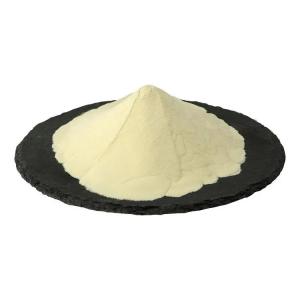
| Appearance | Light yellow to off-white powder | Free-flowing, no visible agglomerates |
| Assay (HPLC) | 50.0% – 52.5% | Per-batch COA and chromatogram |
| Loss on drying | ≤ 3.0% | Karl Fischer method |
| Peroxide value | ≤ 5 meq/kg | Release specification |
| Total heavy metals | ≤ 5 mg/kg | ICP-MS, USP<233> |
| Lead | ≤ 1 mg/kg | ICP-MS, USP<232> |
| Arsenic | ≤ 1 mg/kg | ICP-MS, USP<233> |
| Total aerobic count | ≤ 1,000 CFU/g | Plate count method |
| Salmonella | Negative / 25 g | AOAC 991.12 |
| E. coli | Negative / 10 g | Negative |
| Particle size | ≥ 95% through 180 µm sieve | #80 mesh |
| Bulk density | 0.40 – 0.55 g/mL | Tapped: 0.60 – 0.70 g/mL |
| Shelf life | 24 months | ICH Q1A-derived stability protocol |
| Storage | Sealed, ≤ 25 °C, away from light | Original packaging required |
| Packaging | 1 kg, 5 kg, 10 kg foil bags | Outer: fiber drum or carton |
| Certifications | Kosher, Halal, ISO 9001 | Certificate copies included in documentation |
4. Application Scenarios
A contract manufacturer running a nootropic capsule line uses this 50% PS grade to keep the fill weight down while adding B vitamins and Ginkgo extract in the same two-piece capsule.A plant-based gummy brand switching away from soy-derived PS removes the soy cross-contact warning from its allergen panel, which simplifies retail compliance and consumer communication.
A supplement company preparing for a clinical study on age-related memory decline uses the batch-specific HPLC data and retained archive samples to support research documentation.
An OEM producer piloting a stress-relief tablet formulation benefits from the 180 µm particle size, which reduces segregation when the blend is transferred from V-blender to compression press.
5. Frequently Asked Questions
What is the minimum order quantity?
The standard minimum order is 25 kg. New customers can request a 1 kg sample drawn from the same stock batch, so pre-purchase laboratory validation and the eventual production lot share the same COA. Larger volume slots are published quarterly.
Can I get a sample before buying in bulk?
Yes. A 100 g resealable sachet is available for testing. It ships with the batch COA and the stability summary, and is exempt from commercial import formalities in most jurisdictions because the value stays low. Request the sample via the product page.
How do I verify the assay if the COA is from your in-house lab?
The COA includes the full HPLC chromatogram and the peak table, not only a final percentage. You can run an independent check against the same reference standard that we used. Archive samples of every production lot are retained for 36 months for an audit or a re-test.
Are the kosher and halal certificates current?
Both certificates are valid and renewable annually. The kosher certificate covers the sunflower lecithin supply chain through to the finished powder, and the halal certificate number appears on the lot documentation. Copies are attached before your purchase order is confirmed.
What PS dosage should I use in a finished capsule?
Clinical protocols commonly dose 100 mg to 300 mg of PS per day, either as one or two servings. Memory and stress studies in ageing adults usually use 200 mg/day; a 50% powder format allows the capsule fill to stay compact at that level.
Does the powder work for tablet pressing or only capsules?
The 180 µm particle size allows direct compression in 500 mg tablets when the formulation is dry. If the blend contains hygroscopic botanical extracts, wet granulation is recommended. A pilot blend test with new excipients is the reliable path before a production run.
How long does a bulk order take to arrive?
Standard production lead time is 10–15 days after payment confirmation. Sea freight adds 20–35 days depending on the destination port. Orders above 1 metric ton are produced against a fixed quarterly slot, so schedule confirmation should happen at the beginning of each quarter.
How is the price per kilogram calculated?
Price per kilogram is volume-dependent; the COA set and compliance documentation are included in the quote. Sea-freight cost and customs duties are separate. A proforma invoice shows how much of the unit price relates to packing, documentation and logistics before you confirm.
6. Differentiation Summary
Compared with soy-based PS, sunflower-derived PS removes the allergen declaration from the label and reduces the risk of cross-contact claims. Compared with 20% PS concentrates, the 50% format leaves more payload room for co-active ingredients such as vitamins or botanical extracts, so formulations need fewer excipients to reach the intended serving size.
Lixing pairs its lot trace records with the batch COA and archive samples; a procurement team without internal QC headcount can verify incoming goods without installing a new testing workflow. This suits mid-sized supplement brands and R&D teams that prioritize documented traceability over lowest unit cost. For scale-up projects, the predictable assay window and stable particle distribution reduce the need for frequent formulation rework, which is where the practical saving sits.