
 CN




Phosphatidylserine 51446-62-9 Powder Factory Direct Sales
Time:2026-11-25Phosphatidylserine powder from Lixing is a non-GMO sunflower-derived functional ingredient for supplement manufacturers and private-label brands that need a consistent 20% phosphatidylserine content supply with factory-direct traceability.
Core Selling Points
Factory-direct source: The same facility handles raw material processing, blending, and final packaging. Buyers avoid distributor markups and receive batch-level production records with every shipment.Soy-free sunflower derivative: Made from non-GMO sunflower lecithin rather than soy. This helps finished products carry a soy-free label and reduces allergen management burden for brands targeting sensitive consumers.
HPLC-verified content: Minimum 20% phosphatidylserine is measured by HPLC on every batch. Formulators can calculate dosages from a fixed active marker instead of relying on raw material estimates.
Complete inspection package: Each lot includes a Certificate of Analysis covering content, heavy metals, microbiology, and residual solvents. Third-party reports from SGS or Eurofins are available on request for key batches.
Production-friendly powder: 80-mesh particle size and 0.45–0.65 g/mL bulk density support stable capsule filling and dry blending lines.
Detailed Parameters
| Parameter Item | Parameter Value | Additional Notes |
|---|---|---|
| Product Name | Phosphatidylserine Powder (PS 20%) | Standard bulk specification |
| Raw Material Source | Sunflower lecithin | Non-GMO, soy-free |
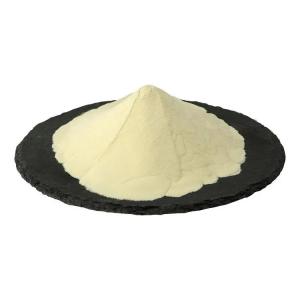
| Appearance | Light yellow to off-white fine powder | No visible impurities |
| Phosphatidylserine Content | ≥ 20% | Test method: HPLC |
| Other Phospholipids | Present | Includes PC, PE, PI, and other phospholipid fractions |
| Heavy Metals | ≤ 10 ppm | Total heavy metals |
| Lead | ≤ 1.0 mg/kg | Per batch |
| Arsenic | ≤ 1.0 mg/kg | Per batch |
| Cadmium | ≤ 1.0 mg/kg | Per batch |
| Mercury | ≤ 0.1 mg/kg | Per batch |
| Residual Solvents | Meets USP<467> | Confirmed on COA |
| Total Plate Count | ≤ 1,000 cfu/g | Aerobic microbial count |
| Yeast & Mold | ≤ 100 cfu/g | Combined count |
| E. coli | Negative | Tested per 1 g |
| Salmonella | Negative | Tested per 25 g |
| Particle Size | 80 mesh with ≥ 95% pass rate | Standard production sieve |
| Bulk Density | 0.45–0.65 g/mL | Measured under standard conditions |
| Storage Condition | Sealed container, dry place, below 25 °C | Keep away from direct sunlight |
| Shelf Life | 24 months from manufacture date | In unopened packaging |
| Packaging | 1 kg foil bag / 20 kg fiber drum | Custom packaging for confirmed orders |
| Certification Coverage | ISO 9001, HACCP, Halal, Kosher | Facility-level certs; lot-level reports available |
Values are based on batch COA reports from current production. Third-party test documentation can be shared under NDA for qualification.
Applicable Scenarios
A dietary supplement manufacturer developing a daily memory-support capsule can rely on the fixed 20% phosphatidylserine marker to calculate overage and hit label claims consistently.A private-label startup launching a cognition-focused product line can use factory-direct supply to keep material costs lower than repackaged distributor inventories.
A sports nutrition brand formulating a recovery or stress-support blend can use sunflower-derived phosphatidylserine to keep the final product soy-free across the entire label.
A functional beverage company testing dry-blend sachets can use the 80-mesh powder to improve dispersion and reduce clumping during high-volume filling.
A trading company exporting raw ingredients can use the complete test package and COA to simplify customs clearance and end-client quality audits.
Common Questions
What is the minimum order quantity for this phosphatidylserine powder?
Sample orders are available from 1 kg. Bulk production starts at 25 kg per SKU. Smaller trial batches are limited to standard 20% phosphatidylserine powder; custom specifications require a confirmed bulk quantity and technical review before production. This structure keeps MOQ low enough for R&D while reserving efficiency for commercial runs.
Is this phosphatidylserine soy-free?
Yes. It is made from non-GMO sunflower lecithin, not soy. The finished product will not require a soy allergen label. Supporting supplier documentation is available for downstream claim verification. We verify the source at every batch intake.
What tests are included on the certificate of analysis?
Each COA covers phosphatidylserine content by HPLC, four heavy metals, total plate count, yeast and mold, E. coli, Salmonella, and residual solvents. Third-party reports from SGS or Eurofins are included for selected batches. All test methods follow pharmacopeia standards where applicable.
How long does bulk production take?
After purchase order confirmation, bulk production runs 10 to 15 working days. Add shipping time for your destination. We can hold shipping if your warehouse schedule requires it, but the confirmed delivery date is the same for every batch.
Can you customize the content or particle size?
Yes, for confirmed bulk orders. We can adjust phosphatidylserine content from 20% to 50% and screen particle size for different dosage forms. Custom work needs formulation trials and is quoted separately from the standard powder price. Send target specifications and expected volume to the technical team.
Does the powder work in capsules and tablets?
The 80-mesh powder is suitable for capsule filling and dry powder blending. For direct compression tablets, formulators should run a granulation trial because phosphatidylserine has waxy characteristics that can affect tablet hardness. We will supply a 1 kg sample for that test.
What is the shelf life and storage condition?
Shelf life is 24 months from manufacture date in unopened packaging. Store below 25 °C, keep away from sunlight, moisture, and strong heat. Once opened, reseal immediately and use it before the next production cycle. A desiccant pack is recommended for long-term storage.
Do you provide Halal, Kosher, or organic certificates?
Halal and Kosher certificates are available for the current production lot. Organic certification depends on the specific raw lecithin lot and should be confirmed at the time of purchase. HACCP and ISO 9001 management systems cover production and quality control.
Many phosphatidylserine suppliers act as middlemen and purchase from multiple plants, which makes batch consistency and documentation harder to verify. Lixing’s factory-direct model shortens the supply chain, reduces lead time, and provides traceability from sunflower lecithin intake to finished powder. The product fits supplement manufacturers, contract formulators, and international buyers who need stable quality, complete test files, and direct technical support during formulation work.