
 CN
News list
News Center





News
Phosphatidyl serine applications explore new fields
Time:2026-11-05
Phosphatidyl serine is a specialized phospholipid that has attracted growing interest across the food, nutrition, dietary supplement, and ingredient formulation industries. As research into phospholipid structures and their compatibility with different formulation systems continues, manufacturers are exploring new application opportunities beyond traditional product categories.
The expansion of phosphatidyl serine applications depends on several factors, including raw material quality, formulation compatibility, processing conditions, product stability, and consumer preferences. These considerations are encouraging ingredient suppliers and product developers to investigate new ways of incorporating phosphatidyl serine into diverse commercial formulations.
Expansion into Functional Food Formulations
Functional food development represents an area of interest for phosphatidyl serine applications. Food manufacturers are continuously exploring specialized ingredients that can be incorporated into convenient and differentiated product formats. Phosphatidyl serine may be evaluated for use in selected nutritional powders, fortified beverages, nutrition bars, and other formulated food products, depending on applicable regulations and technical requirements.
However, incorporating phosphatidyl serine into food systems requires careful formulation design. Its phospholipid characteristics can influence dispersion behavior, interactions with other ingredients, and performance under different processing conditions. Developers must therefore assess ingredient compatibility, sensory properties, and storage stability before selecting an appropriate product format.
New Opportunities in Powdered Nutrition Products
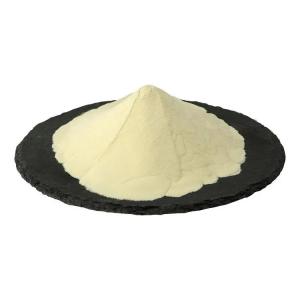
Powdered nutrition products provide another potential direction for application development. Powders are widely used in products designed for convenient preparation, controlled portioning, and flexible ingredient combinations.
When phosphatidyl serine is incorporated into a powdered formulation, several technical factors require attention. These include particle size, moisture content, flowability, mixing uniformity, and compatibility with carriers or other powdered ingredients. Differences in these properties can affect production efficiency and the consistency of the finished product.
Manufacturers may investigate suitable blending, granulation, or encapsulation approaches to improve handling characteristics. The selection of a processing method should be based on the ingredient's specifications and the intended formulation rather than assuming that one technology is suitable for every application.
Exploration of Beverage Formulation Systems
Beverage formulation presents additional technical challenges and opportunities for phosphatidyl serine. Liquid products may contain water, proteins, carbohydrates, oils, emulsifiers, and other components that influence phospholipid dispersion and stability.
Developers exploring beverage applications need to evaluate the ingredient's dispersibility, interaction with the liquid matrix, and behavior during storage. Factors such as pH, temperature, mixing intensity, and the presence of other emulsifying ingredients may affect the final formulation.
Appropriate delivery systems and processing methods can be investigated to improve uniformity and minimize undesirable changes during storage. Pilot-scale trials are particularly valuable for identifying potential formulation limitations before commercial production begins.
Development of Encapsulation and Delivery Technologies
Encapsulation technology is an important research direction for expanding phosphatidyl serine applications. By incorporating an ingredient into a suitable protective matrix, manufacturers can investigate ways to improve handling, reduce exposure to environmental factors, and support more consistent incorporation into finished products.
Potential approaches include spray drying, lipid-based delivery systems, and the use of selected food-grade coating materials. Each method presents different considerations involving processing temperature, moisture exposure, ingredient recovery, and final particle characteristics.
The suitability of a delivery technology depends on the desired product format and the characteristics of the phosphatidyl serine material. Testing should assess not only processing performance but also storage stability, release behavior where relevant, and compatibility with the complete formulation.
Opportunities in Specialized Nutritional Supplements
The dietary supplement sector remains an important area for exploring new phosphatidyl serine product formats. Manufacturers may evaluate capsules, tablets, softgels, and powdered blends according to their target markets and production capabilities.
Each format presents different requirements. Capsules and tablets require appropriate ingredient handling and manufacturing consistency, while softgel formulations involve additional considerations concerning the lipid phase and interactions among formulation components. Powdered blends require uniform distribution and adequate moisture control.
Product developers must also consider ingredient specifications, permitted labeling claims, applicable food or supplement regulations, and the documentation required for their intended markets. These factors help determine whether a proposed product concept can be translated into a commercially viable formulation.
Application in Multi-Ingredient Formulations
Another emerging direction involves incorporating phosphatidyl serine into multi-ingredient formulations. Manufacturers may combine it with other phospholipids, proteins, oils, or selected nutritional ingredients to develop differentiated product compositions.
Such combinations require systematic compatibility assessments. Ingredients may differ in polarity, solubility, particle size, moisture sensitivity, and processing requirements. These differences can influence blending uniformity, dispersion behavior, and the stability of the finished product.
A structured formulation development process typically begins with laboratory screening, followed by stability testing and pilot-scale evaluation. This approach allows manufacturers to identify suitable ingredient combinations while minimizing unnecessary changes during scale-up.
Quality Control and Stability Evaluation
As phosphatidyl serine applications expand into new fields, quality control becomes increasingly important. Different applications may require different specifications, testing methods, and acceptance criteria.
Common evaluation areas include phosphatidyl serine content, moisture, impurity profiles, batch consistency, and relevant microbiological or contaminant parameters. Depending on the formulation, additional testing may assess dispersion, oxidation-related changes, sensory characteristics, and stability under intended storage conditions.
Packaging selection is also an important consideration. Moisture barriers, oxygen exposure, light protection, and storage temperature should be evaluated according to the ingredient's characteristics and the finished product's requirements.
Consistent analytical methods and reliable batch documentation help manufacturers compare results across production runs and maintain quality throughout product development.
Future Trends in Phosphatidyl Serine Applications
Future exploration of phosphatidyl serine applications is likely to focus on formulation innovation, improved delivery technologies, specialized product formats, and more efficient manufacturing processes. Advances in ingredient characterization and analytical testing may also help developers better understand how phosphatidyl serine behaves in different product systems.
At the commercial level, collaboration among ingredient suppliers, formulation specialists, contract manufacturers, and brand owners can accelerate the evaluation of new application concepts. Successful development will depend on balancing technical feasibility, production costs, regulatory compliance, and market demand.
Conclusion
The exploration of new phosphatidyl serine applications reflects broader innovation across the ingredient and nutritional product industries. Functional food formulations, powdered nutrition products, beverage systems, encapsulation technologies, and multi-ingredient supplements all present potential development directions.
Continued progress will require systematic formulation testing, appropriate quality standards, and careful evaluation of processing and storage conditions. By combining technical research with practical manufacturing experience, industry participants can identify suitable new applications and broaden the commercial possibilities for phosphatidyl serine.