
 CN
News list
News Center





News
Phosphatidyl serine customization increases
Time:2026-11-10
The phosphatidyl serine market is gradually moving toward more specialized product development as ingredient manufacturers respond to increasingly diverse customer requirements. Different industries and formulation projects may have distinct expectations regarding product purity, phospholipid composition, physical properties, packaging, and quality documentation.
As a result, customized phosphatidyl serine solutions are becoming an important part of supplier services. Rather than relying exclusively on standard product specifications, manufacturers are placing greater emphasis on flexible production arrangements and application-oriented product development.
Growing Demand for Customized Specifications
Different customers may require different phosphatidyl serine specifications depending on their formulation processes and intended applications. Some focus on phosphatidyl serine content and overall purity, while others pay closer attention to moisture levels, impurity profiles, physical appearance, and batch consistency.
Customized specifications allow manufacturers to establish product requirements according to individual project needs. Through communication with customers, suppliers can clarify essential quality indicators and determine whether existing production capabilities can meet the requested standards.
This approach helps create a closer connection between ingredient production and downstream formulation requirements.
Flexible Product Purity and Composition
Purity and phospholipid composition are important considerations in phosphatidyl serine customization. Different production processes and raw material sources may result in variations in the final composition.
Manufacturers can evaluate extraction and purification processes to provide products that meet specific technical requirements. Customized composition management may involve adjustments to raw material selection, processing conditions, and quality inspection procedures.
However, any customized specification should be supported by appropriate analytical testing. Clear technical documentation is necessary to ensure that the delivered product consistently matches the agreed requirements.
Customized Physical Forms
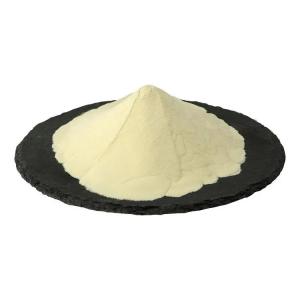
Phosphatidyl serine products may be supplied in different physical forms depending on manufacturing technology and customer preferences. Powder and other suitable ingredient forms can have different characteristics in handling, blending, packaging, and storage.
Customers may request specific particle characteristics, flow properties, or dispersibility requirements to improve compatibility with their production processes.
Manufacturers can evaluate suitable processing and packaging solutions based on the intended application. Physical form customization can help simplify downstream operations and improve ingredient handling efficiency.
Application-Oriented Formulation Development
Customized phosphatidyl serine development is increasingly connected with formulation research. Different food and specialty ingredient systems may contain oils, proteins, emulsifiers, and other components that influence phospholipid behavior.
Manufacturers can work with customers to evaluate compatibility under different formulation conditions. Relevant research may include dispersion behavior, processing stability, moisture sensitivity, and interactions with other ingredients.
Application-oriented development allows suppliers to provide more targeted technical support rather than offering only standardized ingredient products.
Customized Packaging Solutions
Packaging is another important area of phosphatidyl serine customization. Different customers may have different requirements regarding package size, packaging materials, sealing methods, and labeling information.
Suitable packaging can help protect product quality during storage and transportation. Manufacturers may provide different packaging formats according to order quantities, distribution arrangements, and customer production schedules.
Clear labeling and batch identification are also important. Customized packaging should maintain consistent product information and support effective traceability throughout the supply chain.
Quality Control for Customized Products
As customization increases, quality management becomes more complex. Manufacturers need to ensure that different product specifications can be implemented consistently without compromising production control.
A structured quality management system should cover raw material inspection, process monitoring, finished product analysis, and batch documentation.
For customized phosphatidyl serine products, inspection plans should be established according to the agreed specifications. Analytical methods, acceptance criteria, and testing frequencies should be clearly defined before production.
This helps reduce misunderstandings between suppliers and customers while improving delivery consistency.
Flexible Manufacturing and Production Planning
Customized orders may involve different production quantities, specifications, and delivery schedules. Manufacturers therefore need flexible production planning and effective equipment management.
Production lines should be evaluated for their ability to accommodate different processing requirements. Appropriate scheduling can reduce unnecessary equipment adjustments and minimize the risk of cross-batch variations.
Digital production records and process monitoring can also support customized manufacturing. By connecting order information with production and testing data, companies can improve operational transparency and traceability.
Supplier-Customer Technical Cooperation
Successful customization depends on effective communication between suppliers and customers. Before production begins, both parties need to clarify product specifications, application requirements, packaging details, testing methods, and delivery expectations.
Technical cooperation may include sample evaluation, specification confirmation, pilot production, and batch validation. This process helps identify potential issues before large-scale orders are arranged.
Long-term cooperation can also provide manufacturers with valuable feedback, supporting continuous product improvement and more efficient customization services.
Challenges in Customized Phosphatidyl Serine Production
Although customization creates new business opportunities, it also introduces several operational challenges. Frequent changes in product specifications may increase production complexity, while small order quantities can affect equipment utilization and manufacturing costs.
Maintaining consistent quality across different customized batches is another important consideration. Manufacturers need to balance flexibility with standardized operating procedures.
A practical customization strategy should therefore focus on achievable specifications, clear communication, and reliable quality verification.
Future Development Trends
The demand for customized phosphatidyl serine products is expected to encourage further improvements in manufacturing flexibility and technical services. Future development may focus on application-specific specifications, differentiated physical forms, improved packaging options, and more comprehensive quality documentation.
Manufacturers with strong analytical capabilities and adaptable production systems may be better positioned to serve customers with specialized requirements.
As cooperation between ingredient suppliers and downstream industries deepens, customization is likely to become an increasingly important element of phosphatidyl serine product development.
Conclusion
The increase in phosphatidyl serine customization reflects the changing needs of ingredient markets. Product specifications, physical forms, formulation compatibility, packaging, and quality management are all becoming important areas of differentiated service.
By improving manufacturing flexibility, strengthening analytical capabilities, and maintaining close communication with customers, phosphatidyl serine suppliers can develop more targeted product solutions. This approach supports greater product adaptability and creates additional opportunities for the industry's continued development.
Previous:Phosphatidyl serine research fields expand
Next:None