
 CN
News list
News Center





News
Phosphatidyl serine product quality improves
Time:2026-11-09
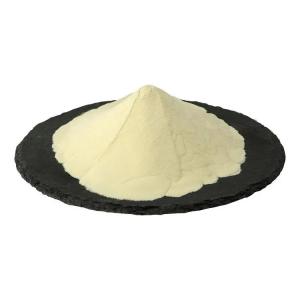
Phosphatidyl serine is a specialty phospholipid ingredient widely used in nutritional formulations, food ingredient development, and other specialized product systems. As market expectations continue to rise, product quality has become a major focus for manufacturers and suppliers. Improvements in raw material selection, production technology, purification processes, and quality management are helping the phosphatidyl serine industry achieve more consistent and standardized product performance.
Raw Material Quality Control
Raw material quality directly influences the characteristics of finished phosphatidyl serine products. Manufacturers are increasingly strengthening supplier evaluation and incoming material inspection to establish a reliable foundation for production.
Important considerations include phospholipid composition, raw material purity, moisture content, and storage conditions. Standardized inspection procedures can help identify potential quality variations before materials enter the manufacturing process.
Careful raw material management also contributes to improved batch consistency and more predictable production outcomes.
Production Process Optimization
Optimizing manufacturing processes is an important approach to improving phosphatidyl serine quality. Manufacturers are continuously refining extraction, enzymatic conversion, separation, and purification procedures to achieve better control over product composition.
Temperature, reaction time, processing conditions, and material concentration all require appropriate management. Improving coordination between individual production stages can reduce unnecessary variations and support more stable manufacturing operations.
The adoption of automated equipment also helps minimize inconsistencies associated with manual processing.
Purity and Composition Improvements
Purity is one of the important indicators used to evaluate phosphatidyl serine products. Advanced purification technologies can help reduce unwanted components and improve the consistency of the final ingredient.
Manufacturers are also paying closer attention to phosphatidyl serine content and the overall phospholipid composition. More precise analytical procedures provide useful information for evaluating product specifications and identifying differences between production batches.
These improvements allow suppliers to offer products that better correspond to different formulation and manufacturing requirements.
Strengthening Quality Testing Systems
Comprehensive analytical testing plays an essential role in phosphatidyl serine quality management. Manufacturers are improving inspection procedures for raw materials, intermediate products, and finished ingredients.
Common testing considerations include:
Phosphatidyl serine content and purity.
Moisture content and physical appearance.
Impurity levels and composition.
Particle size and dispersibility.
Batch-to-batch consistency.
Packaging integrity and storage stability.
The combination of standardized testing methods and detailed production records supports more reliable quality evaluation.
Product Stability and Packaging Improvements
Product stability is another important aspect of quality improvement. Phosphatidyl serine, as a phospholipid ingredient, requires appropriate protection against environmental factors such as oxygen, moisture, light, and excessive temperature.
Manufacturers are exploring improved packaging materials, sealing technologies, and storage management procedures. Suitable packaging can reduce environmental exposure during transportation and warehousing.
In addition, clear labeling and batch identification make product management and traceability more convenient for distributors and downstream customers.
Consistency in Industrial Applications
Different application systems may have specific requirements for phosphatidyl serine specifications and physical characteristics. For this reason, product quality improvements should consider not only purity but also formulation compatibility and processing adaptability.
Particle characteristics, dispersibility, moisture levels, and ingredient composition can influence how phosphatidyl serine performs during blending and formulation. Consistent product specifications help downstream manufacturers maintain more stable production conditions.
Future Quality Development Trends
The phosphatidyl serine industry is expected to place greater emphasis on refined quality control, advanced analytical technologies, and standardized manufacturing systems. Digital production monitoring and automated inspection may further improve the accuracy of quality management.
At the same time, manufacturers will continue exploring improved purification methods, optimized packaging solutions, and more efficient production technologies to meet increasingly diverse market requirements.
Conclusion
Improvements in phosphatidyl serine product quality depend on coordinated progress throughout the manufacturing process. From raw material selection and production optimization to purity testing, packaging, and storage management, every stage contributes to the consistency of the finished ingredient. With continued investment in processing technology and quality management, phosphatidyl serine manufacturers can strengthen product standardization and better meet the evolving needs of the global ingredient market.