
 CN
News list
News Center





News
Phosphatidyl serine production focuses on consistency
Time:2026-11-19
Consistency has become an important priority in the production of phosphatidyl serine as the ingredient market continues to develop. With increasing attention to product specifications, manufacturing efficiency, and supply chain reliability, producers are placing greater emphasis on maintaining stable quality across different production batches.
Phosphatidyl serine is a phospholipid ingredient used in dietary supplements, food ingredient formulations, and other specialized product categories. Its production involves several stages, including raw material preparation, extraction, purification, concentration, and drying. Maintaining consistency throughout these processes is essential for delivering products that meet established customer requirements.
Standardizing Raw Material Selection
Raw material quality is one of the main factors influencing phosphatidyl serine production consistency. Variations in raw material composition, purity, moisture content, and physical properties may affect subsequent processing operations.
Manufacturers are therefore strengthening raw material inspection and supplier evaluation procedures. Establishing clear purchasing specifications helps reduce differences between incoming batches.
Consistent raw material management also provides a more reliable foundation for production planning. Through standardized sourcing and inspection, manufacturers can improve the stability of their overall manufacturing processes.
Optimizing Production Processes
Production process control plays a central role in maintaining phosphatidyl serine consistency. Different processing conditions may influence extraction efficiency, purification performance, material recovery, and final product characteristics.
Manufacturers are increasingly focusing on the standardization of operating parameters, including temperature, processing time, mixing conditions, and material concentration.
By establishing appropriate operating procedures, production facilities can reduce unnecessary process fluctuations. Regular equipment maintenance and process monitoring also help maintain stable manufacturing conditions.
Improving Purification and Separation
Purification and separation are important stages in phosphatidyl serine manufacturing. The effectiveness of these operations can influence the composition and quality characteristics of the finished ingredient.
Manufacturers continuously evaluate separation technologies, filtration conditions, and process parameters to improve production repeatability.
Standardized purification procedures help control variations in product composition. Meanwhile, monitoring intermediate materials allows production teams to identify potential deviations before they affect subsequent manufacturing stages.
Strengthening Drying and Packaging Management
Drying and packaging are additional considerations in maintaining phosphatidyl serine product consistency.
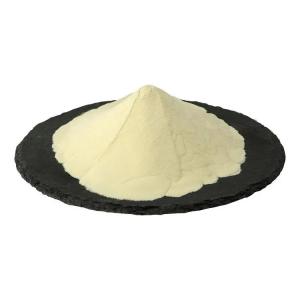
For powder products, drying conditions can influence moisture content, particle characteristics, and material flowability. Excessive variations during drying may result in differences between production batches.
Packaging management is equally important. Suitable moisture-resistant packaging materials and controlled sealing procedures help maintain product conditions during storage and transportation.
Manufacturers also need to consider warehouse temperature, humidity, and inventory management to support consistent product quality throughout distribution.
Establishing Comprehensive Quality Control
A comprehensive quality management system provides the foundation for consistent phosphatidyl serine production.
Manufacturers generally pay attention to several quality indicators:
Phosphatidyl serine content and composition.
Moisture content and appearance.
Particle size distribution and physical properties.
Relevant impurities and residual process materials.
Batch identification and traceability.
Packaging integrity and storage conditions.
Combining raw material inspection, intermediate process testing, and finished product analysis helps manufacturers identify variations at different production stages.
Standardized analytical methods also improve the comparability of test results between batches.
Applying Automation and Digital Monitoring
Automation is creating new opportunities for improving manufacturing consistency. Modern production facilities can introduce automated dosing, temperature monitoring, process control, and production data recording systems.
These technologies help reduce variations caused by manual operations and provide more detailed information about manufacturing conditions.
Digital production records also make it easier to compare different batches, identify process deviations, and evaluate long-term production performance.
As manufacturing systems become more integrated, data-based process management is expected to play a greater role in phosphatidyl serine production.
Future Industry Development
The emphasis on consistency will continue to influence phosphatidyl serine manufacturing. Future improvements are likely to focus on standardized raw material management, refined purification processes, automated production equipment, and more comprehensive quality inspection systems.
Manufacturers will also pay greater attention to production efficiency and supply chain coordination. Stable product specifications and reliable delivery capabilities can help companies establish stronger relationships with ingredient distributors and downstream customers.
Conclusion
Consistency is becoming a central consideration in phosphatidyl serine production. From raw material selection and process optimization to purification, drying, packaging, and quality inspection, every manufacturing stage contributes to the characteristics of the final product.
By strengthening process standardization, introducing advanced monitoring technologies, and improving quality management systems, manufacturers can establish more reliable production operations and better meet the evolving requirements of the global phosphatidyl serine market.
Previous:Phosphatidyl serine industry cooperation grows
Next:None