
 CN
CN
News list
News Center





News
Phosphatidyl serine production technology advances
Time:2026-10-12
Phosphatidyl serine production technology is advancing as manufacturers respond to growing demand for high-quality phospholipid ingredients. Improvements in raw material selection, enzymatic conversion, extraction, purification, drying, and quality control are helping producers achieve more consistent product specifications while improving production efficiency.
Improvements in Raw Material Selection
Raw material quality has a direct influence on phosphatidyl serine production. Manufacturers are increasingly evaluating phospholipid composition, purity, freshness, moisture content, and storage conditions before processing.
Plant-derived raw materials, particularly soybean and sunflower sources, are receiving increasing attention. Better raw material screening and standardized pretreatment processes can help reduce variations between production batches and provide a more stable starting point for downstream processing.
Advances in Enzymatic Production
Enzymatic technology is an important direction in modern phosphatidyl serine manufacturing. Enzymatic conversion can provide greater control over the transformation of phospholipid substrates and may support improved product selectivity.
Process developers are studying enzyme type, enzyme dosage, reaction temperature, reaction time, substrate concentration, and mixing conditions to optimize conversion efficiency. Immobilized enzymes and improved enzyme preparation technologies may further support continuous or semi-continuous production processes.
Optimization of Extraction Processes
Extraction technology is also developing toward higher efficiency and improved selectivity. Traditional solvent-based approaches are being optimized through better solvent selection, solid-liquid contact, extraction temperature, and residence-time control.
At the same time, manufacturers are investigating alternative processing technologies that can reduce solvent consumption and simplify downstream purification. Improved extraction efficiency can contribute to higher production yields and better utilization of raw materials.
Purification Technology Development
Purification is a critical stage in phosphatidyl serine production because the final ingredient requires controlled phospholipid composition and consistent quality. Modern facilities are increasingly combining filtration, adsorption, membrane separation, chromatography, and other separation technologies according to production requirements.
Process integration can reduce unnecessary processing steps while improving impurity removal. More precise separation conditions can also help manufacturers maintain the desired phosphatidyl serine concentration during scale-up.
Improved Drying and Powder Processing
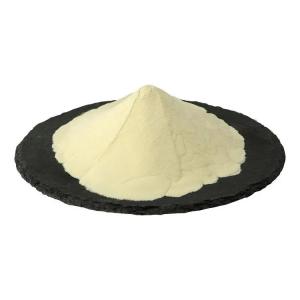
Drying technology has an important influence on the physical characteristics and storage stability of phosphatidyl serine products. Spray drying, vacuum drying, and other controlled drying approaches are being optimized for different product specifications.
Parameters such as inlet temperature, outlet temperature, feed concentration, atomization conditions, and drying time can influence moisture content, particle size, flowability, and dispersibility. Improved powder-processing technology allows manufacturers to develop products suitable for different formulation systems.
Digital Process Control
Digitalization is becoming increasingly relevant to phosphatidyl serine production. Automated monitoring systems can track temperature, pressure, flow rate, mixing conditions, moisture, and other critical production parameters in real time.
Data-based process control can help identify deviations earlier and improve batch-to-batch consistency. Production data can also provide useful information for process optimization and scale-up from laboratory or pilot production to commercial manufacturing.
Stronger Quality Control
Advances in analytical technology are supporting more comprehensive quality evaluation. Manufacturers are placing greater emphasis on phosphatidyl serine content, phospholipid composition, moisture, residual solvents, impurities, oxidative stability, and microbiological quality.
More efficient analytical workflows can shorten testing cycles and provide manufacturers with faster feedback during production. This supports tighter control of critical process parameters and helps maintain consistent finished-product specifications.
Scale-Up and Production Efficiency
As market demand increases, production technology is moving toward larger-scale and more integrated manufacturing systems. Scale-up requires careful control of mixing, heat transfer, mass transfer, reaction kinetics, separation efficiency, and drying performance.
Manufacturers are therefore using pilot-scale studies and process modeling to identify potential production bottlenecks before commercial expansion. Equipment optimization and process integration can improve throughput while reducing material and energy consumption.
Future Development Trends
Future advances in phosphatidyl serine production are likely to focus on higher conversion efficiency, cleaner processing, improved purification, continuous manufacturing, intelligent process control, and more sustainable raw material utilization.
The combination of enzymatic technology, advanced separation processes, automated monitoring, and improved analytical methods can provide a stronger technical foundation for phosphatidyl serine production. As manufacturers continue to optimize these technologies, the industry is expected to achieve greater production consistency, improved resource efficiency, and broader product customization capabilities.
Improvements in Raw Material Selection
Raw material quality has a direct influence on phosphatidyl serine production. Manufacturers are increasingly evaluating phospholipid composition, purity, freshness, moisture content, and storage conditions before processing.
Plant-derived raw materials, particularly soybean and sunflower sources, are receiving increasing attention. Better raw material screening and standardized pretreatment processes can help reduce variations between production batches and provide a more stable starting point for downstream processing.
Advances in Enzymatic Production
Enzymatic technology is an important direction in modern phosphatidyl serine manufacturing. Enzymatic conversion can provide greater control over the transformation of phospholipid substrates and may support improved product selectivity.
Process developers are studying enzyme type, enzyme dosage, reaction temperature, reaction time, substrate concentration, and mixing conditions to optimize conversion efficiency. Immobilized enzymes and improved enzyme preparation technologies may further support continuous or semi-continuous production processes.
Optimization of Extraction Processes
Extraction technology is also developing toward higher efficiency and improved selectivity. Traditional solvent-based approaches are being optimized through better solvent selection, solid-liquid contact, extraction temperature, and residence-time control.
At the same time, manufacturers are investigating alternative processing technologies that can reduce solvent consumption and simplify downstream purification. Improved extraction efficiency can contribute to higher production yields and better utilization of raw materials.
Purification Technology Development
Purification is a critical stage in phosphatidyl serine production because the final ingredient requires controlled phospholipid composition and consistent quality. Modern facilities are increasingly combining filtration, adsorption, membrane separation, chromatography, and other separation technologies according to production requirements.
Process integration can reduce unnecessary processing steps while improving impurity removal. More precise separation conditions can also help manufacturers maintain the desired phosphatidyl serine concentration during scale-up.
Improved Drying and Powder Processing
Drying technology has an important influence on the physical characteristics and storage stability of phosphatidyl serine products. Spray drying, vacuum drying, and other controlled drying approaches are being optimized for different product specifications.
Parameters such as inlet temperature, outlet temperature, feed concentration, atomization conditions, and drying time can influence moisture content, particle size, flowability, and dispersibility. Improved powder-processing technology allows manufacturers to develop products suitable for different formulation systems.
Digital Process Control
Digitalization is becoming increasingly relevant to phosphatidyl serine production. Automated monitoring systems can track temperature, pressure, flow rate, mixing conditions, moisture, and other critical production parameters in real time.
Data-based process control can help identify deviations earlier and improve batch-to-batch consistency. Production data can also provide useful information for process optimization and scale-up from laboratory or pilot production to commercial manufacturing.
Stronger Quality Control
Advances in analytical technology are supporting more comprehensive quality evaluation. Manufacturers are placing greater emphasis on phosphatidyl serine content, phospholipid composition, moisture, residual solvents, impurities, oxidative stability, and microbiological quality.
More efficient analytical workflows can shorten testing cycles and provide manufacturers with faster feedback during production. This supports tighter control of critical process parameters and helps maintain consistent finished-product specifications.
Scale-Up and Production Efficiency
As market demand increases, production technology is moving toward larger-scale and more integrated manufacturing systems. Scale-up requires careful control of mixing, heat transfer, mass transfer, reaction kinetics, separation efficiency, and drying performance.
Manufacturers are therefore using pilot-scale studies and process modeling to identify potential production bottlenecks before commercial expansion. Equipment optimization and process integration can improve throughput while reducing material and energy consumption.
Future Development Trends
Future advances in phosphatidyl serine production are likely to focus on higher conversion efficiency, cleaner processing, improved purification, continuous manufacturing, intelligent process control, and more sustainable raw material utilization.
The combination of enzymatic technology, advanced separation processes, automated monitoring, and improved analytical methods can provide a stronger technical foundation for phosphatidyl serine production. As manufacturers continue to optimize these technologies, the industry is expected to achieve greater production consistency, improved resource efficiency, and broader product customization capabilities.