
 CN
News list
News Center





News
Phosphatidyl serine technology improves
Time:2026-10-21
Phosphatidyl serine technology continues to advance as manufacturers focus on improving production efficiency, product purity, process stability, and raw material utilization. As demand for phosphatidyl serine grows in the global nutrition ingredient market, technological innovation is becoming an important factor in strengthening manufacturing capabilities and product consistency.
Advances in Raw Material Selection
Raw material selection is a fundamental part of phosphatidyl serine production. Soy-derived and sunflower-derived materials are attracting attention as manufacturers evaluate their availability, composition, processing characteristics, and suitability for different product specifications. Improved raw material screening helps reduce variations between batches and supports more consistent production.
Improvements in Extraction and Separation
Extraction and separation technologies play important roles in phosphatidyl serine manufacturing. Process optimization can help improve the recovery of target phospholipids while reducing the presence of unwanted components. Manufacturers are exploring more precise control of extraction conditions, solvent use, and separation parameters to improve overall process efficiency.
Purification Technology Becomes More Refined
Purification is another major area of technological development. Improvements in filtration, chromatographic separation, and other purification approaches can support better control of product composition and impurity levels. Selecting appropriate purification methods also helps manufacturers balance product quality, production costs, and processing efficiency.
Production Process Control Improves
Modern production systems increasingly emphasize standardized operating procedures and accurate monitoring of critical process parameters. Temperature, mixing conditions, processing time, and material ratios can all influence production outcomes. Better process monitoring allows manufacturers to identify deviations earlier and improve batch-to-batch consistency.
Analytical Testing Supports Quality Management
Advanced analytical methods are becoming increasingly important in phosphatidyl serine quality management. Chromatographic analysis and other suitable laboratory techniques can be used to evaluate phosphatidyl serine content, related phospholipid profiles, impurities, and product stability. More comprehensive testing procedures help manufacturers maintain consistent specifications and meet different customer requirements.
Stability Evaluation and Packaging Innovation
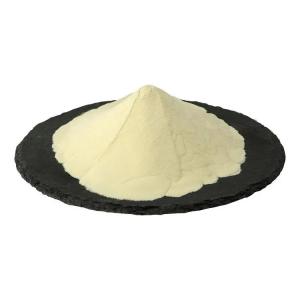
Phosphatidyl serine products require appropriate handling, storage, and packaging to maintain their specified quality. Research into oxidation control, moisture management, packaging barrier properties, and storage conditions helps manufacturers establish more suitable preservation strategies. These improvements are particularly relevant for powdered ingredients intended for extended storage and international distribution.
Automation and Manufacturing Efficiency
Automation is creating opportunities to improve the repeatability of phosphatidyl serine production. Automated dosing, process monitoring, and data collection can reduce manual operating variations and improve production traceability. When integrated with quality management systems, these technologies can also support more efficient troubleshooting and production planning.
Future Development of Phosphatidyl Serine Technology
Future technological development is likely to emphasize more efficient extraction, refined purification, improved analytical methods, sustainable raw material utilization, and data-driven process management. Manufacturers that integrate these approaches can strengthen product consistency and respond more effectively to changing market requirements.
Overall, continuous technological improvement is helping the phosphatidyl serine industry advance toward more standardized, efficient, and quality-oriented manufacturing. As production methods mature, process innovation and quality control will remain central to the industry's long-term development.