
 CN
CN



Phospholipid automated production line
Time:2026-08-25Modern food manufacturing is rapidly advancing toward full automation, intelligent batching and continuous streamlined production, which imposes strict requirements on the simplicity, stability and compatibility of raw material applications. Most conventional food emulsifiers, thickeners and functional additives require tedious pre-treatment procedures before official feeding, including pre-dissolving, hot water activation, hydraulic shearing, prolonged hydration and impurity filtration. These manual-dependent processes disrupt automated production rhythms, cause inconsistent batch performance and increase production costs. In comparison, natural food-grade phospholipids feature ultra-high processing adaptability with zero pretreatment barriers. They can be directly added to production systems in their original form without pre-dissolution, heating activation or premixing, perfectly matching high-speed unmanned assembly lines and standardized intelligent manufacturing systems.
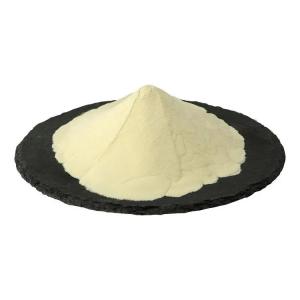
The core reason why phospholipids achieve pretreatment-free feeding lies in their superior physical stability and natural dispersion performance. Produced through low-temperature physical purification, homogenization and fine screening technology, commercial phospholipid products maintain uniform particle fineness, stable fluidity and anti-caking properties. Unlike modified starch, colloidal gums and synthetic emulsifiers that easily agglomerate in water or oil and require forced stirring to avoid undissolved masses, phospholipids possess excellent amphipathic diffusion capabilities. Once directly dosed into water-phase liquids, oil-phase substrates or dry powder mixtures, they can rapidly disperse, spread and form uniform interfacial films without external preprocessing intervention. This inherent physical advantage eliminates the need for independent material preparation workshops and auxiliary processing equipment.
Direct dosing capability perfectly fits the operational logic of modern automated food production lines. Intelligent production equipment such as screw quantitative feeders, continuous mixing systems and automatic batching robots requires raw materials with stable flow characteristics and predictable dissolution effects to ensure precise metering and consistent product quality. Many traditional additives fail to adapt to fully automated feeding due to poor fluidity and moisture sensitivity, forcing manufacturers to retain manual pre-processing stations and restricting overall automation efficiency. Phospholipids with stable physical properties can be directly connected to automated feeding pipelines, realizing accurate quantitative feeding, synchronous mixing and real-time emulsification. The entire production process achieves unmanned continuous operation, effectively improving line throughput and production standardization.
Eliminating pretreatment processes greatly simplifies production workflows and reduces comprehensive manufacturing costs. Traditional additive pretreatment requires dedicated labor, stirring tanks, constant-temperature activation equipment and independent operation space, which increases equipment investment, energy consumption and labor management costs. By adopting phospholipids for direct feeding, food enterprises can omit all pre-hydration and premixing procedures, streamline production steps and reduce equipment maintenance workload. Meanwhile, fewer manual operation links effectively avoid raw material waste caused by equipment wall adhesion, residual materials and incomplete dissolution, improving raw material utilization rate and reducing invisible production losses.
Pretreatment-free direct dosing also significantly improves batch stability and product consistency. Manual pretreatment is highly susceptible to human operational differences, including inconsistent stirring duration, uneven activation temperature and inaccurate premixing ratio. These subtle deviations lead to fluctuating emulsification effects, unstable product texture and inconsistent taste between production batches. With phospholipids fully adapted to automated direct feeding, all feeding amounts, mixing speed and dispersion effects are controlled by unified program parameters. The functional performance of phospholipids in each batch remains highly consistent, effectively eliminating quality fluctuations caused by human factors and realizing long-term stable and standardized production.
This zero-barrier processing characteristic demonstrates universal adaptability across diverse food production scenarios. In high-speed beverage and dairy production lines, phospholipids can be directly added during the mixing process to quickly balance water and oil phases without prior activation; in baked food and nutritional powder production, powdered phospholipids can be directly blended with flour, sugar and other dry materials to achieve uniform mixing; in grease processing and margarine production, liquid phospholipids can be quantitatively injected through pipelines to complete efficient emulsification. Whether in low-temperature cold processing or high-temperature sterilization environments, phospholipids maintain stable dispersion and functional performance without process adaptation obstacles.
Furthermore, reducing manual pretreatment links improves food safety and production compliance. Every manual material handling step increases the risk of microbial contamination, foreign matter intrusion and secondary pollution. The direct feeding mode of phospholipids minimizes human contact with raw materials, standardizes the production process, and helps enterprises meet strict food safety management specifications. Combined with its natural clean-label attributes and all-age edible safety, phospholipids provide a reliable, efficient and safe raw material solution for the upgrading of modern intelligent food factories.
Natural phospholipids break the traditional processing limitations of food additives with their excellent fluidity, spontaneous dispersion performance and stable physical and chemical properties. The zero-pretreatment and direct-dosing features fully adapt to high-speed, automated and continuous production modes, simplifying production procedures, reducing operating costs, stabilizing batch quality and improving production safety. As an efficient and processing-friendly functional ingredient, phospholipids have become an essential raw material for intelligent and standardized upgrading of the modern food industry.