
 CN




Phosphatidylserine 51446-62-9 Wholesale
Time:2026-11-18Product Definition
Phosphatidylserine Wholesale is a bulk sunflower-lecithin-derived phospholipid ingredient supplied by Lixing for supplement manufacturers and formulators who need a soy-free, high-purity phosphatidylserine powder with verified ≥20% content and stable physical properties for cognitive health products.
Core Selling Points
Phosphatidylserine content ≥20% (HPLC) — Provides a calculable active-ingredient baseline for label claims, allowing formulators to reach a 100 mg phosphatidylserine serving with 500 mg of powder without relying on unverified filler percentages.Sunflower lecithin source — Eliminates soy protein residue concerns for allergy-sensitive brands and supports non-GMO, allergen-controlled labeling in finished products.
Acid value ≤20 mg KOH/g and peroxide value ≤5 meq/kg — Maintains oxidative stability during storage and fat-based formulations, reducing rancidity-related returns for softgel and tablet products.
100% passes through 80 mesh — Ensures uniform blending with vitamins and excipients, preventing segregation in capsule filling lines and improving batch consistency.
Microbial limits within typical global supplement standards — Total aerobic count ≤1,000 cfu/g, yeast & mold ≤100 cfu/g, with negative E. coli and Salmonella per 25 g, which shortens incoming inspection time for manufacturers.
Detailed Parameters
| Parameter | Value | Note |
|---|---|---|
| Product name | Phosphatidylserine (PS) bulk powder | Sunflower-lecithin derived |
| Active content | ≥20% | Determined by HPLC |
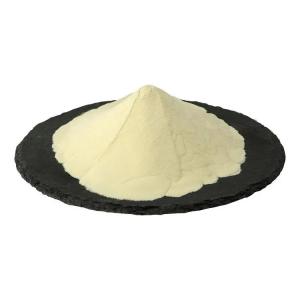
| Appearance | Off-white to light yellow powder | Free-flowing, no visible agglomerates |
| Source | Sunflower lecithin | Non-GMO, soy-free |
| Bulk density | 0.3–0.6 g/mL | Lot-specific, listed on COA |
| Loss on drying | ≤3.0% | Moisture control |
| Acid value | ≤20 mg KOH/g | Low free fatty acid content |
| Peroxide value | ≤5 meq/kg | Oxidative stability indicator |
| Heavy metals | ≤10 ppm | Total, ICP-MS |
| Arsenic | ≤1 ppm | ICP-MS |
| Lead | ≤1 ppm | ICP-MS |
| Mercury | ≤0.1 ppm | ICP-MS |
| Total aerobic count | ≤1,000 cfu/g | Standard microbial limit |
| Yeast & mold | ≤100 cfu/g | Standard microbial limit |
| E. coli | Negative | Per 25 g |
| Salmonella | Negative | Per 25 g |
| Particle size | 100% pass 80 mesh | For blending uniformity |
| Packing | 25 kg net weight per drum | Also available in 1 kg/5 kg trial packs after qualification |
| Shelf life | 24 months | From manufacturing date, sealed in original packaging |
| Documentation | Batch COA, MSDS, allergen statement, non-GMO declaration, flow chart | Available per shipment request |
All values above are verified from the batch-specific Certificate of Analysis (COA) issued at release.
Applicable Scenarios
Cognitive health supplement brand: Use this bulk powder to formulate memory-support capsules or tablets with a daily phosphatidylserine dose of 100–300 mg, while avoiding soy allergen labels.Private-label manufacturer: Replace soy-derived phosphatidylserine with this sunflower-based powder when a retail client requires a non-GMO, allergen-free finished product.
DHA/omega-3 sports nutrition producer: Blend phosphatidylserine at 100 mg per serving into post-exercise recovery formulas where cortisol-management claims are part of the product concept.
Finished supplement importer: Purchase standardized 25 kg drums to simplify cross-border documentation because each lot includes COA and regulatory test data for local health department filing.
Common Questions
What is phosphatidylserine wholesale?
Phosphatidylserine wholesale means buying bulk phosphatidylserine powder as a raw material rather than finished supplements. Brands use this ingredient to make their own capsules, tablets, or powder formulas. A typical order is multiple 25 kg drums from the same production batch to maintain consistent label claims across production runs.
How much phosphatidylserine should be in a daily serving?
Published human trials on cognitive function commonly use 100–300 mg of phosphatidylserine per day. For a 100 mg phosphatidylserine serving using this 20% powder, you need 500 mg of raw material plus normal overage allowance. Calculate the final capsule weight after adding excipients.
Is sunflower-derived Phosphatidylserine suitable for people with soy allergies?
Yes. Sunflower-derived phosphatidylserine contains no soy protein and is processed from sunflower lecithin. The finished powder is routinely tested for soy allergen residues and the negative result is documented on the COA before batch release.
What quality tests are performed on each batch?
Each batch is tested for phosphatidylserine content by HPLC, peroxide value, acid value, moisture, heavy metals, and microbial count including total aerobic count, yeast, mold, E. coli, and Salmonella. Results are recorded on a lot-specific COA and retained for full traceability.
What are the storage requirements for bulk Phosphatidylserine powder?
Store sealed drums below 25°C in a dry place away from direct sunlight. After opening, immediately close the container and use nitrogen flushing where available. Under these conditions, the shelf life is 24 months from the manufacturing date printed on the original packaging.
What certificates are available for Lixing phosphatidylserine?
Lixing supplies a batch COA, allergen statement, non-GMO declaration, MSDS, and an aseptic process flow chart. Halal, Kosher, and FSSC 22000 certificates are available on request with pre-shipment documents before international delivery.
Can I use this powder in tablet formulations?
Yes. The powder passes 100% through 80 mesh, so it distributes evenly with fillers, binders, and active vitamins. For direct compression, use suitable lubricants; for granulation, adjust moisture based on the LOD value listed on the COA.
What is the minimum order quantity?
Standard export packaging is 25 kg net weight per drum. For small-scale pilot batches, Lixing can arrange 1 kg or 5 kg trial packs after product qualification. Full drum orders can be reserved under a single batch number to keep content uniformity.
Differentiation Summary
Compared to conventional soy-derived phosphatidylserine, this product removes soy allergen exposure while maintaining ≥20% HPLC purity and low acid/peroxide values. The particle size is optimized for high-speed blending lines, and each production lot ships with a complete COA covering purity, heavy metals, and microbial data. Lixing supplies this raw material to supplement brands that need reproducible phospholipid performance and regulatory-ready documentation for cognitive health product registration.