
 CN



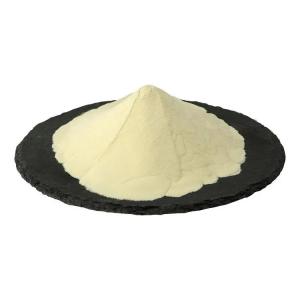


Bulk Supply Phosphatidylserine 51446-62-9
Time:2026-11-06Lixing Phosphatidylserine is a bulk, 20% standardized soy-derived powder for dietary supplement manufacturers who need a reproducible cognitive health ingredient with clean documentation.
Core Selling Points
Active content: minimum 20% phosphatidylserine measured by HPLC; a 500 mg capsule delivers 100 mg of phosphatidylserine for straightforward dose calculation.Plant-derived source: obtained from soybean lecithin through an enzymatic conversion process, with no bovine brain tissue in the supply chain.
Heavy metals control: lead ≤0.5 mg/kg, arsenic ≤0.5 mg/kg, cadmium ≤0.1 mg/kg, mercury ≤0.1 mg/kg; each lot is released with a certificate of analysis.
Blending performance: 95% of particle size passes 80 mesh (0.18 mm aperture), which improves flowability in capsule filling and dry powder mixing.
Microbiological profile: total plate count ≤1,000 CFU/g, yeast and mold ≤100 CFU/g, negative for Salmonella and Escherichia coli.
Detailed Specifications
| Parameter | Value | Additional Notes |
|---|---|---|
| Product name | Phosphatidylserine bulk powder | Standardized to 20% as-is |
| Appearance | Off-white to light yellow fine powder | Visual inspection |
| Assay (phosphatidylserine) | Min 20.0% as-is | HPLC |
| Loss on drying | ≤3.0% w/w | Determined by moisture balance |
| Bulk density | 0.35–0.55 g/mL | Untapped, loose density |
| Particle size | 95% passes 80 mesh | Sieve analysis |
| Residual solvents | Conforms to USP <467> | GC |
| Lead (Pb) | ≤0.5 mg/kg | ICP-MS |
| Arsenic (As) | ≤0.5 mg/kg | ICP-MS |
| Cadmium (Cd) | ≤0.1 mg/kg | ICP-MS |
| Mercury (Hg) | ≤0.1 mg/kg | ICP-MS |
| Total plate count | ≤1,000 CFU/g | AOAC method |
| Yeast and mold | ≤100 CFU/g | AOAC method |
| Salmonella | Negative /30 g | AOAC method |
| E. coli | Negative /10 g | AOAC method |
| Storage conditions | Sealed container below 20°C | Protect from light and moisture |
| Shelf life | 18 months from production date | Unopened container |
Specification source: Lixing Batch Quality Standard, 2024.
Application Scenarios
Cognitive supplement manufacturers: use a 500 mg powder fill per capsule to deliver 100mg phosphatidylserine in daily memory support products.Sports nutrition formulators: combine the powder with electrolytes or protein premixes in products aimed at post-exercise stress relief and cortisol response.
Aging health brands: incorporate into brain health formulas for adults over 50 where consistent dosage and clean labeling are critical.
Nootropic startups: blend with L-theanine, Ginkgo biloba, or Bacopa monnieri; the fixed 20% assay makes label declarations easier to calculate.
Contract manufacturing teams: use the free-flowing powder in high-speed capsule filling lines without additional milling or sieving before blending.
Common Questions
What is bulk phosphatidylserine used for?
Supplement manufacturers add it to memory, focus, and stress-support capsules. A typical finished product provides 100–400 mg of phosphatidylserine per day. Because this powder is standardized to 20%, it is easy to reach target dosages without complex extraction steps.
Is Lixing Phosphatidylserine derived from animal sources?
No. It is made from soybean lecithin by enzymatic conversion. The production process is free of bovine raw materials, so the powder does not carry TSE/BSE-related risks. Finished products using this ingredient can be labeled vegetarian.
How much powder gives a 100 mg Phosphatidylserine dose?
Since the assay is 20% as-is, 500 mg of powder delivers 100 mg of phosphatidylserine. In a standard 500 mg capsule fill, one capsule reaches that dosage. Use a calibrated scale when making small test batches.
What is the difference between 20% and 50% phosphatidylserine?
The 20% grade contains a soy lecithin carrier and flows more consistently in dry blend operations. The 50% grade provides more actives per gram but is easier to over-dose in low-fill weights. For ordinary capsule production, 20% offers better blend uniformity and simpler handling.
Do you supply a certificate of analysis for each lot?
Yes. Each lot is released with a COA covering assay, loss on drying, heavy metals, residual solvents, and microbiology. The COA is provided before shipment, and batch records are retained for customer audits.
What is the supported shelf life?
18 months from the date of manufacture when stored in an unopened container below 20°C, away from direct sunlight and moisture. Avoid freezing, since condensation on sealed packaging can increase local moisture content.
Can this powder be used in gummies or chewables?
Phosphatidylserine is lipophilic and not suitable for direct water-based gummy formulations. It works well in two-piece capsules, tablets, or dry premixes. For chewables use it in an oil-based premix system instead.