
 CN
CN
News list
News Center





News
High-quality phosphatidyl serine demand increases
Time:2026-10-15
Demand for high-quality phosphatidyl serine is increasing as ingredient buyers place greater emphasis on consistency, purity, source transparency, and formulation compatibility.
The phosphatidyl serine market is expected to continue expanding through the coming years, while market research increasingly identifies product concentration, source, physical form, and documentation as important purchasing considerations.
This shift is encouraging manufacturers to move beyond basic production toward more comprehensive quality-oriented supply systems.
Purity Becomes a Key Purchasing Factor
Purity is becoming one of the most important indicators when manufacturers evaluate phosphatidyl serine ingredients.
High-quality materials require effective control of phosphatidyl serine content as well as related phospholipids, residual processing components, moisture, and other quality parameters. Recent supplier guidance also emphasizes the importance of reviewing assay, acetone-insoluble content, and heavy-metal information when evaluating phosphatidyl serine powder.
As downstream formulations become more standardized, stable composition is increasingly important.
Demand for Consistent Assay
Batch-to-batch consistency is closely connected with formulation accuracy.
Manufacturers need phosphatidyl serine ingredients with relatively stable assay values so that formulation calculations and production processes can remain consistent. This is particularly important for concentrated powder products used in dry blends and other standardized ingredient systems.
Consequently, suppliers are paying greater attention to process control and analytical testing throughout production.
Plant-Based Sources Gain Attention
Plant-based phosphatidyl serine is becoming an important segment of the market.
Soy and sunflower lecithin are widely used as starting materials, while sunflower-derived ingredients are attracting additional attention in applications where non-GMO or alternative plant sourcing is important. Current market analysis identifies plant-derived phosphatidyl serine as a leading source category.
This trend is encouraging suppliers to strengthen source management and raw-material traceability.
Raw Material Quality Management
The quality of phosphatidyl serine depends strongly on the quality of its upstream phospholipid feedstock.
Lecithin source, phospholipid composition, moisture, oxidation condition, and storage history can all influence subsequent processing. Therefore, high-quality production increasingly begins with strict raw-material qualification rather than relying only on finished-product testing.
Supplier evaluation and incoming-material inspection are becoming important parts of the quality system.
Enzymatic Production Technology
Enzymatic conversion is an important production route for plant-derived phosphatidyl serine.
The production process requires control of substrate quality, enzyme activity, reaction conditions, separation, and purification. Variations in any of these stages can influence the composition and consistency of the final ingredient.
As demand for higher-quality products increases, optimization of enzymatic conversion is likely to become an important area of process development.
Purification Technology Development
Purification is another major factor influencing high-quality phosphatidyl serine production.
Manufacturers need to separate unwanted components while retaining the desired phospholipid fraction. Improved purification can support higher concentration products and more consistent compositional profiles.
Current market analysis also identifies purification technologies as an important part of phosphatidyl serine manufacturing.
Powder Products Remain Important
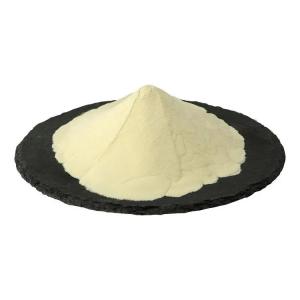
Powder is an important commercial form of phosphatidyl serine.
Powdered ingredients can be incorporated into dry blends and other concentrated formulations, making them convenient for standardized production. Current market research places powder among the leading product forms in the phosphatidyl serine market.
This is encouraging manufacturers to improve powder flowability, moisture control, particle-size consistency, and storage stability.
Moisture Control
Moisture management is important for maintaining consistent phospholipid ingredient quality.
Excess moisture can influence powder handling and may affect storage behavior. Therefore, drying conditions, packaging materials, warehouse humidity, and transportation conditions all need to be considered.
High-quality suppliers increasingly need to treat moisture management as part of the entire production and logistics process.
Oxidation and Storage Stability
Phospholipid materials require appropriate storage and packaging conditions.
Exposure to oxygen, heat, and unsuitable storage environments can affect product quality over time. High-quality phosphatidyl serine therefore requires not only suitable production technology but also appropriate packaging and storage management.
This creates additional demand for stability testing and shelf-life evaluation.
Analytical Testing Becomes More Comprehensive
The development of high-quality phosphatidyl serine is closely connected with analytical technology.
Chromatographic methods can be used to evaluate phospholipid composition and assay, while additional analytical techniques can provide information about moisture, oxidation indicators, residual components, and contaminants.
A more comprehensive testing system allows manufacturers to identify quality changes earlier in the production process.
Traceability Is Increasingly Important
High-quality ingredient procurement increasingly requires complete traceability.
Customers may request information regarding raw-material source, production batch, manufacturing location, analytical results, processing route, and relevant quality documentation.
Traceability can help manufacturers identify the source of batch variation and provide stronger documentation for downstream product development.
Supplier Qualification Is Becoming More Detailed
As product requirements become more demanding, supplier qualification is also becoming more comprehensive.
Buyers are increasingly evaluating production capabilities, quality systems, raw-material sources, analytical methods, certificates, packaging, delivery stability, and technical support rather than simply comparing prices.
This is gradually shifting competition from basic product supply toward integrated quality and service capabilities.
Customized Concentrations and Formats
Different downstream applications may require different phosphatidyl serine concentrations and physical formats.
Some customers may prioritize concentrated ingredients, while others may need materials with specific powder characteristics or formulation compatibility. The ability to provide customized specifications can therefore become an important competitive factor.
This trend is also encouraging closer cooperation between ingredient suppliers and formulation companies.
Quality and Formulation Compatibility
High quality does not only mean high assay.
An ingredient must also be compatible with the customer's formulation process. Particle size, dispersibility, moisture, flow properties, source, and processing history can influence downstream manufacturing.
Therefore, future phosphatidyl serine suppliers are likely to provide greater emphasis on application-oriented technical support.
Demand for Stable Supply
As high-quality phosphatidyl serine becomes more important, customers also require stable supply.
Agricultural raw materials, lecithin availability, production capacity, processing technology, and international logistics can all influence supply stability. Recent trade-flow data show active phosphatidyl serine movements among major producing and consuming countries, highlighting the increasingly international nature of the supply chain.
Stable sourcing is therefore becoming part of the overall definition of a high-quality supplier.
Sustainability and Source Transparency
Sustainability considerations are increasingly influencing ingredient procurement.
Plant-based raw materials can provide alternative sourcing options, while manufacturers are paying greater attention to agricultural origin, processing efficiency, packaging, and supply-chain transparency.
For phosphatidyl serine suppliers, sustainable sourcing can therefore become complementary to conventional quality-control requirements.
High-Quality Ingredients and Premium Formulations
The development of premium formulations is creating additional demand for consistent phosphatidyl serine ingredients.
Rather than simply selecting an ingredient based on nominal concentration, formulation companies may consider source, purity, analytical documentation, physical characteristics, and supply stability together.
This creates opportunities for suppliers capable of offering differentiated grades and comprehensive technical documentation.
Digital Quality Management
Digital systems can further improve high-quality phosphatidyl serine production.
Production parameters, raw-material batches, analytical results, packaging records, and warehouse information can be integrated into a traceability system. Data analysis can then be used to identify recurring quality variations and optimize production conditions.
Digital quality management may become particularly valuable as production volumes and product specifications increase.
Future Development of High-Quality Phosphatidyl Serine
Future development is likely to focus on several areas, including higher compositional consistency, improved purification, diversified plant-based sourcing, better stability control, advanced analytical testing, and more complete supply-chain traceability.
At the same time, suppliers may increasingly develop application-specific grades for different formulation systems.
The combination of material quality, process technology, analytical capability, and supply reliability will become increasingly important in determining supplier competitiveness.
Conclusion
The growing demand for high-quality phosphatidyl serine is driving changes across the entire ingredient industry. Buyers are paying increasing attention to purity, assay consistency, source transparency, physical characteristics, analytical documentation, and supply stability.
As the market develops, phosphatidyl serine manufacturers will need to strengthen raw-material control, enzymatic processing, purification, analytical testing, storage management, and traceability. Suppliers capable of combining consistent quality with flexible formulation support and reliable supply are likely to have stronger opportunities in the evolving phosphatidyl serine market.
The phosphatidyl serine market is expected to continue expanding through the coming years, while market research increasingly identifies product concentration, source, physical form, and documentation as important purchasing considerations.
This shift is encouraging manufacturers to move beyond basic production toward more comprehensive quality-oriented supply systems.
Purity Becomes a Key Purchasing Factor
Purity is becoming one of the most important indicators when manufacturers evaluate phosphatidyl serine ingredients.
High-quality materials require effective control of phosphatidyl serine content as well as related phospholipids, residual processing components, moisture, and other quality parameters. Recent supplier guidance also emphasizes the importance of reviewing assay, acetone-insoluble content, and heavy-metal information when evaluating phosphatidyl serine powder.
As downstream formulations become more standardized, stable composition is increasingly important.
Demand for Consistent Assay
Batch-to-batch consistency is closely connected with formulation accuracy.
Manufacturers need phosphatidyl serine ingredients with relatively stable assay values so that formulation calculations and production processes can remain consistent. This is particularly important for concentrated powder products used in dry blends and other standardized ingredient systems.
Consequently, suppliers are paying greater attention to process control and analytical testing throughout production.
Plant-Based Sources Gain Attention
Plant-based phosphatidyl serine is becoming an important segment of the market.
Soy and sunflower lecithin are widely used as starting materials, while sunflower-derived ingredients are attracting additional attention in applications where non-GMO or alternative plant sourcing is important. Current market analysis identifies plant-derived phosphatidyl serine as a leading source category.
This trend is encouraging suppliers to strengthen source management and raw-material traceability.
Raw Material Quality Management
The quality of phosphatidyl serine depends strongly on the quality of its upstream phospholipid feedstock.
Lecithin source, phospholipid composition, moisture, oxidation condition, and storage history can all influence subsequent processing. Therefore, high-quality production increasingly begins with strict raw-material qualification rather than relying only on finished-product testing.
Supplier evaluation and incoming-material inspection are becoming important parts of the quality system.
Enzymatic Production Technology
Enzymatic conversion is an important production route for plant-derived phosphatidyl serine.
The production process requires control of substrate quality, enzyme activity, reaction conditions, separation, and purification. Variations in any of these stages can influence the composition and consistency of the final ingredient.
As demand for higher-quality products increases, optimization of enzymatic conversion is likely to become an important area of process development.
Purification Technology Development
Purification is another major factor influencing high-quality phosphatidyl serine production.
Manufacturers need to separate unwanted components while retaining the desired phospholipid fraction. Improved purification can support higher concentration products and more consistent compositional profiles.
Current market analysis also identifies purification technologies as an important part of phosphatidyl serine manufacturing.
Powder Products Remain Important
Powder is an important commercial form of phosphatidyl serine.
Powdered ingredients can be incorporated into dry blends and other concentrated formulations, making them convenient for standardized production. Current market research places powder among the leading product forms in the phosphatidyl serine market.
This is encouraging manufacturers to improve powder flowability, moisture control, particle-size consistency, and storage stability.
Moisture Control
Moisture management is important for maintaining consistent phospholipid ingredient quality.
Excess moisture can influence powder handling and may affect storage behavior. Therefore, drying conditions, packaging materials, warehouse humidity, and transportation conditions all need to be considered.
High-quality suppliers increasingly need to treat moisture management as part of the entire production and logistics process.
Oxidation and Storage Stability
Phospholipid materials require appropriate storage and packaging conditions.
Exposure to oxygen, heat, and unsuitable storage environments can affect product quality over time. High-quality phosphatidyl serine therefore requires not only suitable production technology but also appropriate packaging and storage management.
This creates additional demand for stability testing and shelf-life evaluation.
Analytical Testing Becomes More Comprehensive
The development of high-quality phosphatidyl serine is closely connected with analytical technology.
Chromatographic methods can be used to evaluate phospholipid composition and assay, while additional analytical techniques can provide information about moisture, oxidation indicators, residual components, and contaminants.
A more comprehensive testing system allows manufacturers to identify quality changes earlier in the production process.
Traceability Is Increasingly Important
High-quality ingredient procurement increasingly requires complete traceability.
Customers may request information regarding raw-material source, production batch, manufacturing location, analytical results, processing route, and relevant quality documentation.
Traceability can help manufacturers identify the source of batch variation and provide stronger documentation for downstream product development.
Supplier Qualification Is Becoming More Detailed
As product requirements become more demanding, supplier qualification is also becoming more comprehensive.
Buyers are increasingly evaluating production capabilities, quality systems, raw-material sources, analytical methods, certificates, packaging, delivery stability, and technical support rather than simply comparing prices.
This is gradually shifting competition from basic product supply toward integrated quality and service capabilities.
Customized Concentrations and Formats
Different downstream applications may require different phosphatidyl serine concentrations and physical formats.
Some customers may prioritize concentrated ingredients, while others may need materials with specific powder characteristics or formulation compatibility. The ability to provide customized specifications can therefore become an important competitive factor.
This trend is also encouraging closer cooperation between ingredient suppliers and formulation companies.
Quality and Formulation Compatibility
High quality does not only mean high assay.
An ingredient must also be compatible with the customer's formulation process. Particle size, dispersibility, moisture, flow properties, source, and processing history can influence downstream manufacturing.
Therefore, future phosphatidyl serine suppliers are likely to provide greater emphasis on application-oriented technical support.
Demand for Stable Supply
As high-quality phosphatidyl serine becomes more important, customers also require stable supply.
Agricultural raw materials, lecithin availability, production capacity, processing technology, and international logistics can all influence supply stability. Recent trade-flow data show active phosphatidyl serine movements among major producing and consuming countries, highlighting the increasingly international nature of the supply chain.
Stable sourcing is therefore becoming part of the overall definition of a high-quality supplier.
Sustainability and Source Transparency
Sustainability considerations are increasingly influencing ingredient procurement.
Plant-based raw materials can provide alternative sourcing options, while manufacturers are paying greater attention to agricultural origin, processing efficiency, packaging, and supply-chain transparency.
For phosphatidyl serine suppliers, sustainable sourcing can therefore become complementary to conventional quality-control requirements.
High-Quality Ingredients and Premium Formulations
The development of premium formulations is creating additional demand for consistent phosphatidyl serine ingredients.
Rather than simply selecting an ingredient based on nominal concentration, formulation companies may consider source, purity, analytical documentation, physical characteristics, and supply stability together.
This creates opportunities for suppliers capable of offering differentiated grades and comprehensive technical documentation.
Digital Quality Management
Digital systems can further improve high-quality phosphatidyl serine production.
Production parameters, raw-material batches, analytical results, packaging records, and warehouse information can be integrated into a traceability system. Data analysis can then be used to identify recurring quality variations and optimize production conditions.
Digital quality management may become particularly valuable as production volumes and product specifications increase.
Future Development of High-Quality Phosphatidyl Serine
Future development is likely to focus on several areas, including higher compositional consistency, improved purification, diversified plant-based sourcing, better stability control, advanced analytical testing, and more complete supply-chain traceability.
At the same time, suppliers may increasingly develop application-specific grades for different formulation systems.
The combination of material quality, process technology, analytical capability, and supply reliability will become increasingly important in determining supplier competitiveness.
Conclusion
The growing demand for high-quality phosphatidyl serine is driving changes across the entire ingredient industry. Buyers are paying increasing attention to purity, assay consistency, source transparency, physical characteristics, analytical documentation, and supply stability.
As the market develops, phosphatidyl serine manufacturers will need to strengthen raw-material control, enzymatic processing, purification, analytical testing, storage management, and traceability. Suppliers capable of combining consistent quality with flexible formulation support and reliable supply are likely to have stronger opportunities in the evolving phosphatidyl serine market.