
 CN
News list
News Center





News
Phosphatidyl serine applications attract attention
Time:2026-11-12
Phosphatidyl serine is a specialized phospholipid that has attracted growing attention across the food ingredient, nutrition, biotechnology, and research sectors. Its distinctive molecular structure and role as a component of biological membranes make it an important subject in phospholipid research and product development.
As manufacturing technologies advance and ingredient requirements become more refined, the application potential of phosphatidyl serine is receiving increasing interest. Different industries are exploring its material characteristics, formulation compatibility, and possibilities for incorporation into specialized products.
Basic Characteristics of Phosphatidyl Serine
Phosphatidyl serine belongs to the phospholipid family and contains both hydrophilic and lipophilic structural regions. This amphiphilic nature influences its behavior in different formulation environments.
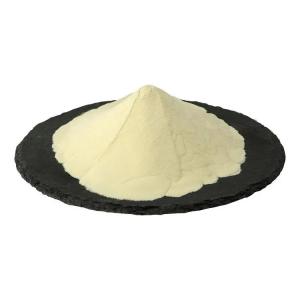
Its physical and chemical properties may vary according to raw material sources, production processes, purity levels, and product specifications. Commercial products are therefore commonly evaluated through indicators such as phosphatidyl serine content, moisture, appearance, and impurity profile.
Understanding these characteristics provides a foundation for selecting appropriate application methods.
Applications in Food Ingredient Development
The food ingredient sector is an important area of interest for phosphatidyl serine. Product developers are examining its compatibility with different ingredient systems and processing conditions.
In powdered formulations, factors such as particle size, moisture content, flowability, and dispersibility can influence processing performance. In composite ingredient systems, formulation designers may need to consider interactions with proteins, carbohydrates, oils, and emulsifying components.
The selection of suitable processing and packaging conditions helps maintain product consistency throughout manufacturing and storage.
Applications in Nutrition-Oriented Products
Phosphatidyl serine is also used as an ingredient in certain nutrition-oriented product categories. Its inclusion requires attention to formulation design, ingredient specifications, and applicable regulatory requirements.
Manufacturers may evaluate the compatibility of phosphatidyl serine with other ingredients, including vitamins, minerals, plant-derived materials, and different lipid components.
Product development typically involves considering dosage specifications, raw material quality, processing stability, and the characteristics of the finished product. Regulatory compliance and accurate product labeling are also essential considerations.
Applications in Biotechnology Research
In biotechnology, phosphatidyl serine is relevant to research involving phospholipid structures, membrane composition, and lipid-based systems.
Researchers may use phosphatidyl serine in experimental formulations designed to investigate interactions between phospholipids and other biological components. Its structural properties also make it relevant to the study of membrane models and specialized lipid assemblies.
For research applications, product purity, batch consistency, and analytical documentation are important selection criteria.
Potential in Lipid-Based Formulation Systems
Phospholipids are widely studied as structural components in lipid-based formulation systems. Phosphatidyl serine may be evaluated alongside other phospholipids when developing specialized dispersions, emulsions, and lipid assemblies.
Its compatibility with a particular system depends on several factors, including the surrounding lipid composition, aqueous environment, processing method, and concentration.
Formulation testing is therefore necessary to determine suitable material ratios and processing parameters.
Quality Requirements and Product Selection
As application areas expand, manufacturers and buyers are paying closer attention to phosphatidyl serine quality management.
Important evaluation factors include:
Content specification: The measured phosphatidyl serine content should meet the intended product requirements.
Purity profile: Other phospholipids and relevant impurities should be controlled according to established specifications.
Moisture management: Moisture levels can influence powder handling and storage stability.
Batch consistency: Consistent analytical results help support repeatable formulation and production.
Documentation: Technical specifications, testing records, and traceability information facilitate supplier evaluation.
Selecting a suitable grade requires matching product specifications with the actual processing and application conditions.
Storage and Packaging Considerations
Phosphatidyl serine products require appropriate packaging and storage management. Exposure to moisture, oxygen, light, and unsuitable temperatures may affect product quality over time.
Moisture-resistant packaging, effective sealing, and controlled warehouse conditions are commonly considered during product handling. For bulk materials, manufacturers should also establish procedures for transportation, container opening, and resealing.
Clear batch identification and storage records help maintain traceability throughout the supply chain.
Future Application Development
Further interest in phosphatidyl serine is likely to encourage research into new formulation approaches, improved ingredient compatibility, and more specialized product specifications.
Manufacturers may continue to optimize production methods while developing different grades for food ingredient, nutrition-oriented, and research applications. Improvements in analytical testing and quality documentation will also help support more consistent material selection.
As application requirements become more specific, cooperation between raw material suppliers, formulation developers, and manufacturers will remain important.
Conclusion
Phosphatidyl serine applications are attracting attention across food ingredient development, nutrition-oriented products, biotechnology research, and lipid-based formulation systems. Its structural characteristics provide opportunities for further investigation, while practical application depends on product quality, formulation compatibility, processing conditions, and regulatory requirements. Continued research and manufacturing improvements are expected to support the development of more specialized phosphatidyl serine products.
Previous:Phosphatidyl serine production innovation continues
Next:None