
 CN
News list
News Center





News
Phosphatidyl serine quality evaluation advances
Time:2026-11-18
Phosphatidyl Serine (PS) is an important phospholipid widely used in the food ingredient, nutritional ingredient, and specialty formulation industries. With the continuous development of phospholipid processing technologies and the expansion of application markets, product quality evaluation has become an increasingly important part of the phosphatidyl serine industry. More comprehensive testing methods, improved analytical technologies, and standardized quality management systems are helping manufacturers achieve better product consistency and production reliability.
1. Development of Comprehensive Quality Evaluation Systems
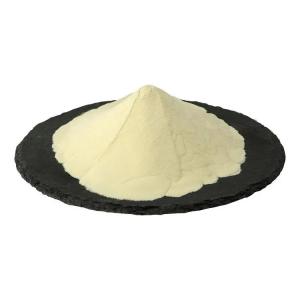
Traditional phosphatidyl serine quality assessment mainly focuses on basic physicochemical properties and active ingredient content. However, modern quality evaluation systems are gradually expanding to cover multiple indicators, including purity, moisture content, appearance, color, solubility, impurity profiles, and batch consistency.
By integrating different testing parameters, manufacturers can obtain a more complete understanding of product characteristics. This approach also helps establish clearer product specifications and provides a reliable basis for raw material selection, production monitoring, and finished product inspection.
2. Improvements in Analytical Testing Technologies
Advances in analytical instruments have significantly improved the accuracy and efficiency of phosphatidyl serine quality evaluation. High-performance liquid chromatography is commonly used to determine phosphatidyl serine content and examine related phospholipid components.
Other analytical techniques, including thin-layer chromatography, infrared spectroscopy, and mass spectrometry, can provide additional information about molecular characteristics, component composition, and potential impurities.
The combination of multiple analytical methods allows manufacturers to evaluate product quality from different perspectives while improving the reliability of testing results.
3. Greater Attention to Purity and Impurity Control
Purity is one of the key indicators used to evaluate phosphatidyl serine products. Different raw material sources and manufacturing processes may influence the final composition and impurity profile.
Modern quality management increasingly emphasizes the identification and control of residual raw materials, related phospholipids, processing residues, and other potential impurities.
Establishing appropriate testing procedures at different production stages helps manufacturers identify variations earlier and maintain more consistent product specifications.
4. Batch Consistency and Process Monitoring
Batch-to-batch consistency is essential for commercial phosphatidyl serine production. Variations in raw material composition, reaction conditions, separation processes, and drying parameters may affect the characteristics of the finished product.
To address these challenges, manufacturers are introducing more systematic process monitoring and quality data management practices.
By recording important production parameters and comparing analytical results across different batches, production teams can identify potential deviations and optimize manufacturing conditions. This contributes to improved production stability and more predictable product quality.
5. Moisture Content and Storage Stability Evaluation
Moisture content is another important parameter in phosphatidyl serine quality assessment. Excessive moisture may influence powder characteristics, storage behavior, and product handling conditions.
Modern evaluation procedures increasingly combine moisture testing with packaging integrity assessments and storage stability studies.
Factors such as temperature, humidity, oxygen exposure, and packaging material selection are considered when evaluating product stability. Appropriate packaging and storage management help maintain consistent product characteristics throughout transportation and distribution.
6. Standardization of Quality Documentation
As the international phosphatidyl serine market continues to develop, standardized technical documentation is becoming increasingly important.
Manufacturers are placing greater emphasis on certificates of analysis, product specifications, testing procedures, batch records, and traceability documentation.
Clear and consistent documentation enables customers to compare products from different suppliers more efficiently. It also supports quality audits, supply chain management, and communication between manufacturers and downstream users.
7. Future Trends in Phosphatidyl Serine Quality Evaluation
Future developments in phosphatidyl serine quality evaluation are expected to focus on analytical precision, automated testing, digital quality management, and more comprehensive product characterization.
Advanced analytical platforms may improve the identification of minor components and related impurities. Meanwhile, digital data systems can help integrate raw material inspection, production monitoring, laboratory testing, and finished product release into a unified quality management framework.
The combination of advanced analytical technologies and standardized evaluation procedures will provide new opportunities for improving manufacturing efficiency and product consistency.
Conclusion
The advancement of phosphatidyl serine quality evaluation reflects the growing demand for reliable specifications and consistent product characteristics in the phospholipid industry. Improvements in analytical testing, purity assessment, impurity control, batch monitoring, and quality documentation are contributing to more systematic manufacturing practices.
As testing technologies and quality management systems continue to evolve, phosphatidyl serine manufacturers will be better positioned to improve product consistency, strengthen quality control, and meet the changing requirements of international markets.